Adding a Utility Sink to Your Snellville Garage or Workshop (What You Need to Know)
Adding a utility sink to your Snellville garage or workshop gives you a dedicated space for cleaning tools, washing paintbrushes, or handling messy projects without tracking dirt through your home. The process involves extending water supply lines, creating proper drainage, and meeting Georgia plumbing codes. This guide walks you through the key considerations, from determining if your garage has the right drainage slope to understanding permit requirements in Gwinnett County. Georgia State Minimum Standard Plumbing Code.
Before you start shopping for sinks, you need to answer one critical question: does your garage have a floor drain or will you need a pump system? Most Snellville homes built on concrete slabs face this challenge since gravity drainage requires a specific floor slope that many garages lack. Understanding this upfront saves you from costly surprises during installation.. Read more about Solving Persistent Drain Odors in Peoplestown by Checking Your P-Traps and Vent Stacks.
Why Add a Utility Sink to Your Atlanta Garage?
Homeowners in Snellville and surrounding areas choose utility sinks for several practical reasons. The Georgia climate means you’re often dealing with red clay mud from gardening projects or cleaning automotive parts that leave grease stains. A utility sink provides a dedicated cleanup station that protects your kitchen and bathroom sinks from damage.
Many Snellville workshops serve double duty as hobby spaces where woodworking, automotive repair, or crafting happens year-round. Having running water nearby eliminates the need to carry heavy buckets through your home. Plus, during Atlanta’s humid summers, you can quickly rinse off tools and materials that might otherwise develop mildew.. Read more about How Gray Water Recycling Can Help You Maintain a Lush Garden in Palmetto.
The convenience factor cannot be overstated. Whether you’re washing muddy boots after a hike at Rhodes Jordan Park or cleaning paintbrushes from a home improvement project, a utility sink in your garage creates a barrier between outdoor messes and your living space.
Our Installation Process: From Rough-in to Finish
Professional installation of a garage utility sink follows a specific sequence that ensures code compliance and long-term reliability. The process starts with evaluating your existing plumbing infrastructure to determine the most efficient way to extend hot and cold water lines from your home’s main supply. Plumbing Decatur.
Next comes the drainage assessment. This is where many DIY projects fail because they underestimate the complexity of proper venting and trap installation. The Georgia State Minimum Standard Plumbing Code requires specific P-trap configurations and vent pipe sizing that vary based on the sink’s distance from the main stack. Plumbing Roswell.
The rough-in phase involves cutting into walls or floors to run new supply lines and drain pipes. For slab-on-grade homes common in Snellville, this often means working through concrete, which requires specialized tools and creates significant dust. Professional plumbers use dust containment systems to protect your vehicles and stored items.
Once the rough plumbing passes inspection, the finish work includes mounting the sink, connecting fixtures, and testing for leaks. The final step involves sealing all penetrations and ensuring proper insulation around pipes to prevent condensation in Atlanta’s humid climate.. Read more about Essential Plumbing Planning for New Pool Houses and Cabanas in Cumming.
Determining Drainage Solutions (Gravity vs. Upflush)
The drainage method for your garage utility sink depends on your garage’s floor elevation relative to your home’s main sewer line. Gravity drainage works when your garage floor sits at or below the level of your home’s drainage system, allowing wastewater to flow naturally through sloped pipes. How to Deal with Main Sewer Line Clogs in Your Decatur Bungalow.
However, most Snellville garages built on concrete slabs sit above the main sewer line elevation. In these cases, you need an upflush or macerating pump system. These units grind waste and pump it vertically to reach the main drain, making installation possible even when gravity won’t work.
Upflush systems have become increasingly popular in Atlanta’s suburban garages because they eliminate the need for breaking through concrete floors. The trade-off is higher initial cost and slightly higher energy usage, but the installation disruption is minimal compared to traditional methods.
Before deciding, a professional plumber will measure your garage floor elevation and inspect your home’s plumbing layout. This diagnostic step prevents the common mistake of assuming gravity drainage will work when your specific situation requires a pump system.
Hot and Cold Water Line Extensions
Extending water lines to your garage requires careful planning to maintain proper water pressure. Most residential supply lines use ½-inch copper or PEX piping, but the distance from your water heater affects the final pressure at your utility sink.
For garages located more than 30 feet from the main water supply, pressure loss becomes noticeable. Professional plumbers calculate this using the Hazen-Williams formula to ensure your utility sink receives adequate flow for both hot and cold water.
The hot water line extension presents unique challenges in Atlanta’s climate. During summer months, uninsulated hot water pipes in unconditioned garages can lose significant heat, resulting in lukewarm water that never reaches optimal temperature. Proper insulation with R-4 or higher foam sleeves prevents this energy waste.
Shut-off valves installed near the sink provide emergency control without requiring you to shut off water to your entire home. These quarter-turn ball valves offer reliability that older multi-turn valves cannot match, especially in areas with hard water common in Gwinnett County. Who to Call for an Emergency Pipe Burst in Buckhead.
Types of Utility Sinks We Install (Wall-Mount, Floor-Mount, Drop-in)
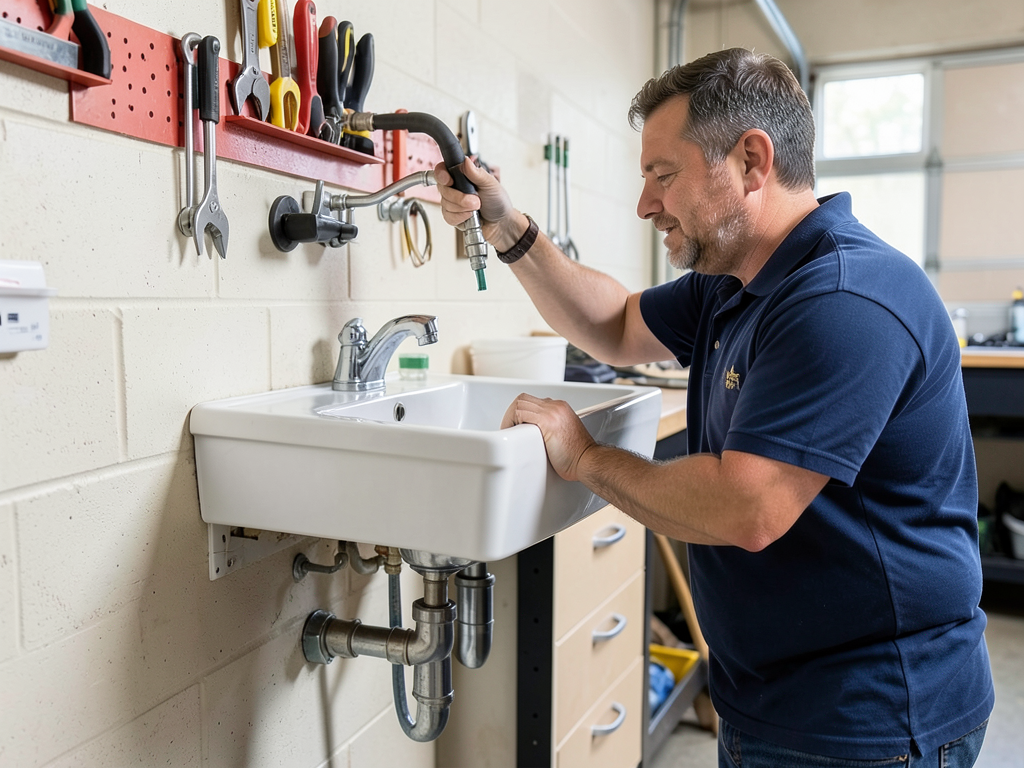
Utility sink selection impacts both functionality and installation complexity. Wall-mounted sinks attach directly to garage studs, keeping the floor clear for cleaning and providing easy access underneath for plumbing maintenance.
Floor-mounted utility sinks offer superior stability for heavy-duty use. These units bolt to the concrete floor and typically feature deeper basins that accommodate larger items like buckets or automotive parts. The installation requires drilling into concrete but provides a more permanent solution.
Drop-in utility sinks work well when you have existing cabinetry or a dedicated counter space in your workshop. These sinks install into a pre-cut opening and offer the most finished appearance, though they require more precise measurements during the rough-in phase.
Material selection matters significantly in Atlanta’s climate. Stainless steel resists corrosion but shows water spots easily in areas with hard water. Heavy-duty polypropylene offers excellent chemical resistance and hides minor scratches, making it ideal for workshops where harsh cleaners are common.
Size considerations should match your intended use. A 14-inch deep basin handles most household tasks, while 20-inch deep models accommodate larger items like coolers or small trash cans. The extra depth comes at the cost of increased water usage for each fill. The Best Way to Handle a Gas Line Leak in Smyrna.
Navigating Atlanta Plumbing Codes and Permits
Installing a utility sink in your Snellville garage requires compliance with the Georgia State Minimum Standard Plumbing Code, which adopts the International Plumbing Code with state-specific amendments. Section 301.3 specifically addresses drainage for fixtures in non-living spaces like garages. International Plumbing Code.
Permit requirements vary by jurisdiction within the Atlanta metro area. Gwinnett County requires permits for any new fixture installation that involves cutting into existing plumbing or creating new drainage. The permit fee typically ranges from $75 to $150 depending on the project scope.
Venting requirements under Code Section 903.1 mandate that all fixtures have proper air admittance to prevent sewer gas from entering living spaces. For garage installations, this often means extending vent pipes through the roof or installing air admittance valves that meet mechanical code standards.
Backflow prevention becomes critical when connecting new fixtures to existing supply lines. The code requires specific check valves or reduced pressure principle assemblies when the new fixture could potentially contaminate the potable water supply.
Inspection requirements include rough-in inspection before closing walls and a final inspection after completion. These inspections ensure your installation meets safety standards and will function properly for years to come.
Cost Factors for Garage Sink Installation in Georgia
Installation costs for garage utility sinks vary significantly based on your specific situation. The baseline cost for a straightforward installation with existing drainage access starts around $800 to $1,200 in the Snellville area.
Complex installations requiring concrete cutting, pump systems, or extensive supply line runs can push costs to $2,500 or more. The most significant variables include whether you need an upflush pump, the distance from existing plumbing, and whether concrete demolition is required.
Material costs range from $150 for basic polypropylene wall-mount units to $600 for heavy-duty stainless steel floor-mount models with professional-grade faucets. Premium features like pull-out sprayers or built-in soap dispensers add $75 to $200 to the material cost.
Labor represents the largest cost component, typically $500 to $1,500 depending on project complexity. Atlanta’s plumbing labor rates reflect the specialized skills required for proper venting and drainage installation in non-standard spaces like garages.
Permit fees, while relatively minor at $75 to $150, are mandatory in Gwinnett County and must be factored into your budget. Skipping permits risks fines and can complicate future home sales.
Frequently Asked Questions
Can I install a utility sink in my garage without a floor drain?
Yes, you can install a utility sink without a floor drain by using an upflush or macerating pump system. These units grind waste and pump it to your home’s main drain line, eliminating the need for gravity drainage. The system requires an electrical outlet nearby and costs more upfront but avoids concrete demolition.
Do I need a permit to add a utility sink to my Snellville garage?
Yes, Gwinnett County requires permits for new fixture installations that involve plumbing modifications. The permit ensures your installation meets the Georgia State Minimum Standard Plumbing Code and includes required inspections. Permit fees typically range from $75 to $150 depending on project scope.
How long does professional utility sink installation take?
Most professional installations take one to two days. The first day covers rough-in plumbing, including cutting access holes, running new lines, and installing drainage components. The second day handles fixture mounting, final connections, and testing. Complex installations requiring concrete work or pump systems may extend to three days.
Will a garage utility sink affect my home’s water pressure?
When properly installed, a garage utility sink should not noticeably affect your home’s water pressure. Professional plumbers calculate pressure loss based on pipe sizing and distance from the main supply. If your home has marginal pressure, a plumber might recommend a pressure-boosting system during the installation.
What size utility sink works best for a garage workshop?
For most garage workshops, a 15 to 18-inch deep basin provides the best balance of capacity and water efficiency. Deeper basins (20+ inches) accommodate larger items but use more water per use. Width should match your available space, with 24 inches being the minimum for practical use.
How do I prevent my garage utility sink pipes from freezing in winter?
In Atlanta’s occasional freeze events, insulate exposed pipes with foam sleeves rated for your climate zone. For added protection, install electric heat tape on supply lines and ensure the sink cabinet or enclosure allows warm air circulation. During extreme cold snaps, let a small trickle of water run through the faucet.
Can I use my existing washing machine plumbing for a utility sink?
While possible, using washing machine plumbing for a utility sink often violates code requirements. Laundry standpipes have specific sizing and venting requirements that differ from utility sink installations. A professional assessment determines if your existing setup can be safely adapted or if new plumbing is necessary.
What’s the difference between wall-mount and floor-mount utility sinks?
Wall-mount utility sinks attach to wall studs, keeping floors clear and providing easy access underneath for cleaning and maintenance. Floor-mount sinks bolt directly to concrete floors, offering superior stability for heavy-duty use but requiring more complex installation. Your choice depends on your workshop needs and installation preferences.
How do I maintain my new garage utility sink?
Regular maintenance includes cleaning the basin with non-abrasive cleaners, checking supply line connections quarterly for leaks, and pouring water down the drain monthly to maintain the P-trap seal. For upflush systems, follow manufacturer guidelines for cleaning the macerator to prevent buildup and ensure proper operation.
Can I install a utility sink myself to save money?
While DIY installation is possible, it carries significant risks including code violations, improper venting that allows sewer gas entry, and leaks that cause water damage. Professional installation ensures compliance with Georgia plumbing codes, proper drainage function, and warranty protection on both labor and materials.
Ready to Add a Utility Sink to Your Snellville Garage?
Adding a utility sink transforms your garage into a more functional workspace while protecting your home’s interior from messy cleanup tasks. The key to success lies in proper planning, code compliance, and professional installation that addresses your specific garage layout and drainage situation.
Don’t let the complexity of garage plumbing deter you from this valuable upgrade. Our team has installed hundreds of utility sinks throughout Snellville and understands the unique challenges of Georgia’s slab-on-grade construction and local building codes.
Call (770) 610-5522 today to schedule your free consultation. We’ll assess your garage’s plumbing potential, explain your options clearly, and provide a detailed quote with no hidden fees. Whether you need a simple wall-mount sink or a complex upflush system, we have the expertise to get it done right the first time.
Pick up the phone and call (770) 610-5522 before the next messy project leaves you wishing for running water in your garage. Your workshop deserves the same convenience as your kitchen.