




Menu

Tank vs. Tankless Water Heaters in Atlanta – Get the Facts Before You Buy

Compare conventional storage tanks and on-demand tankless systems side by side to understand efficiency, capacity, and lifespan differences for Atlanta homes and businesses.

Slider Image 1
Slider Image 2
Slider Image 3
Slider Image 4
Slider Image 5
Slider Image 7
Slider Image 8
Slider Image 9
Slider Image 10
Slider Image 11

Why Atlanta Homeowners Are Rethinking Their Water Heater Choice

You need hot water. The question is how you get it.

Traditional storage tank water heaters have dominated Atlanta basements and garages for decades. They hold 40 to 80 gallons of preheated water, ready when you turn the tap. Tankless systems, also called instantaneous or on-demand water heaters, heat water only as it flows through the unit. No storage. No standby heat loss.

Atlanta's hard water, high in calcium and magnesium from the Chattahoochee River and underground aquifers, accelerates sediment buildup in storage tanks. This sediment layer reduces efficiency, creates rumbling noises, and shortens tank lifespan. Conventional water heaters in Atlanta often fail earlier than their rated lifespan because of mineral accumulation. You flush the tank annually, or you pay for it later.

Tankless systems avoid this sediment problem. Water flows through a heat exchanger rather than sitting in a tank. But Atlanta's mineral-heavy water can still clog the heat exchanger if you skip annual descaling maintenance. No system is maintenance-free here.

The standard vs tankless water heater comparison comes down to usage patterns, space constraints, and upfront budget. A family of five in Buckhead running three showers, a dishwasher, and a washing machine simultaneously will push a single tankless unit to its limit. You may need multiple units or a hybrid approach. A couple in Virginia Highland with predictable morning routines may find one tankless unit handles everything.

Climate matters less here than in freeze-prone northern cities. Atlanta winters rarely threaten outdoor tankless installations, but summer humidity can accelerate corrosion on both tank and tankless models if ventilation is poor. Choose the system that matches your actual hot water demand, not the one a neighbor recommends.

Why Atlanta Homeowners Are Rethinking Their Water Heater Choice
How the Two Systems Actually Work

How the Two Systems Actually Work

Conventional tank water heaters use a simple mechanism. Cold water enters the bottom of the tank through a dip tube. A gas burner or electric heating element warms the water to your set temperature, typically 120 to 140 degrees. Hot water exits through a pipe at the top. The thermostat cycles the burner on and off to maintain temperature, even when you are not using hot water. This is standby heat loss. You pay to keep 50 gallons hot at 3 a.m. when everyone is asleep.

Tankless water heaters eliminate standby loss. When you open a hot water tap, cold water flows into the unit and triggers a flow sensor. The gas burner or electric heating coil ignites or activates. Water passes through a heat exchanger, where it is heated to the set temperature in seconds. When you close the tap, the burner shuts off. No stored water. No wasted energy between uses.

Capacity works differently. A 50-gallon storage tank gives you 50 gallons of hot water before you wait for recovery. A tankless unit provides continuous hot water, but only at a specific flow rate measured in gallons per minute. A typical residential tankless unit delivers 5 to 8 gallons per minute, depending on incoming water temperature and desired output temperature. Atlanta's groundwater averages 65 degrees year-round. To raise that to 120 degrees, you need a temperature rise of 55 degrees. At that delta, most tankless units max out around 5 gallons per minute.

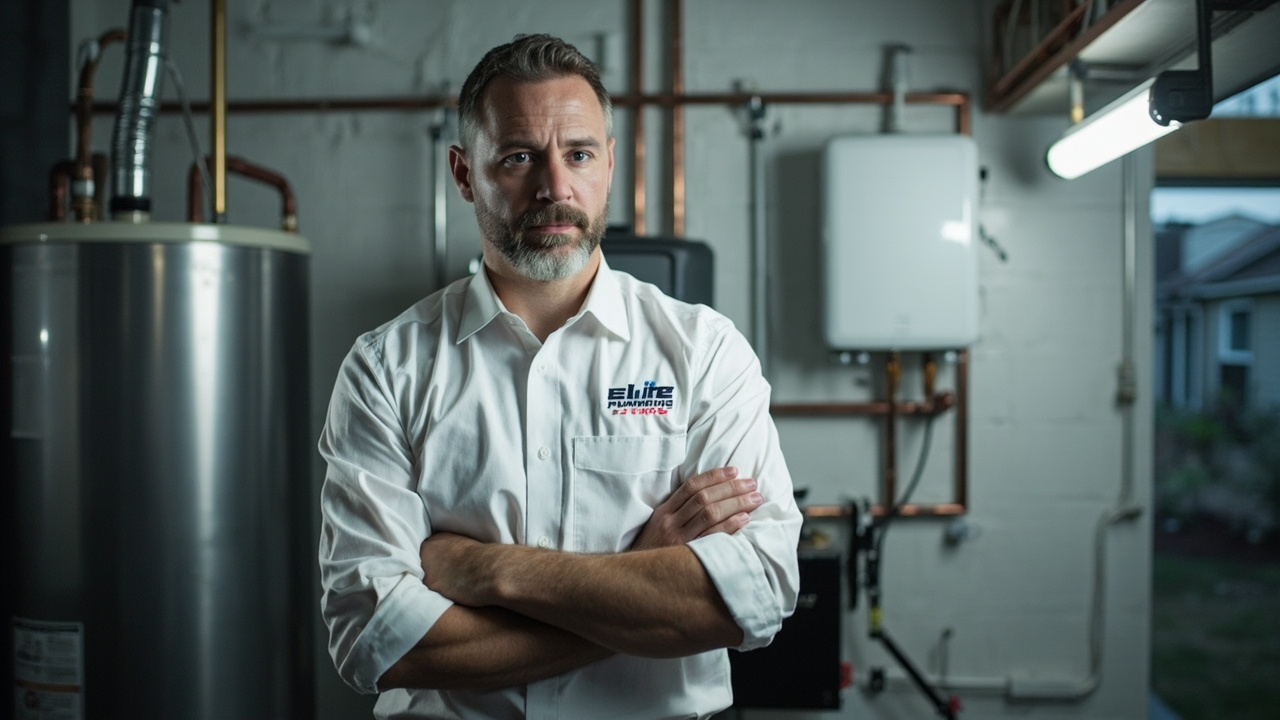
Run two showers and a dishwasher at once, and you may exceed that flow rate. The water gets lukewarm. Sizing matters. Elite Plumbing Atlanta calculates your peak demand before recommending a system. We account for simultaneous fixtures, incoming water temperature, and your household's actual usage patterns. Generic sizing charts fail in real-world applications.

What Happens When You Request a Water Heater Consultation

Tank vs. Tankless Water Heaters in Atlanta – Get the Facts Before You Buy
01

Usage Assessment and Sizing

We start by mapping your hot water demand. How many bathrooms? How many people? Do you run appliances simultaneously? We measure incoming water temperature at your property and calculate the required temperature rise. We count fixtures and estimate peak flow rate. This determines whether a storage or instantaneous water heater fits your demand profile. We do not guess. We calculate.
02

Cost and Efficiency Analysis

We compare upfront installation costs, projected energy savings, and equipment lifespan for both systems. Tankless units cost more initially but use less energy over time. Storage tanks cost less upfront but waste energy on standby heat loss. We factor in Atlanta's average natural gas and electricity rates, your current energy bills, and expected usage. You see real numbers, not marketing fluff.
03

Installation Planning and Execution

After you choose a system, we verify gas line capacity for tankless units or electrical service for high-demand electric models. We confirm venting requirements and code compliance. Installation includes proper pressure relief valves, expansion tanks where needed, and water shutoff accessibility. We test the system under load and walk you through maintenance requirements before we leave.

Why Local Expertise Matters for Water Heater Decisions

Atlanta's water chemistry changes by neighborhood. Homes in Sandy Springs pull water from different sources than properties in Decatur. Hardness levels vary. Chlorine treatment protocols differ. A plumber who does not test your specific water may recommend the wrong system or skip critical filtration.

We test water hardness on-site. If you have over 10 grains per gallon, we recommend a water softener ahead of the tankless unit. Without it, calcium buildup clogs the heat exchanger within two years. The manufacturer warranty excludes scale damage. You pay for a new heat exchanger or a full replacement. Preventable. Expensive.

Atlanta's building codes require specific venting for tankless water heaters. Category III stainless steel venting is mandatory for condensing gas tankless units. PVC venting works for some models but fails inspection for others. We know which inspectors enforce which codes in Fulton, DeKalb, and Cobb counties. We pull permits. We pass inspection the first time.

Elite Plumbing Atlanta has installed both conventional and tankless systems across the metro area for over a decade. We have seen which brands hold up under Atlanta's water conditions and which fail early. We have replaced units that other companies installed incorrectly. Undersized gas lines. Improper venting. No expansion tanks. These mistakes cost you thousands in premature failures.

We stock parts for the brands we recommend. When a circuit board fails on a Rinnai or Navien tankless unit, we have the replacement part on the truck. When a Rheem or Bradford White tank develops a leak, we can often repair it same-day. Speed matters when you have no hot water.

You get a detailed written estimate before we start work. No upselling. No surprise fees. You know what you are paying for and why.

What You Can Expect from Each System Type

Installation Timeline and Complexity

Replacing a storage tank with another storage tank takes four to six hours if gas lines, venting, and water connections are already in place. Switching from tank to tankless requires gas line upgrades, new venting, electrical work for the ignition system, and sometimes water line modifications. Expect a full day for tankless installations. If you need multiple tankless units for high-demand homes, plan for two days. We coordinate inspections and minimize downtime. Most homes regain hot water the same day.

Energy Efficiency and Operating Costs

Conventional tank water heaters waste energy on standby heat loss. You pay to keep water hot even when you are not home. Tankless systems heat water only on demand, reducing energy use by 20 to 40 percent in most Atlanta homes. However, if your household uses hot water sporadically throughout the day, a tank may recover faster and feel more convenient. Tankless units take a few seconds to deliver hot water because they must heat it from scratch. You waste water waiting for it to arrive at distant fixtures unless you install a recirculation system.

Lifespan and Replacement Frequency

Storage tank water heaters last 8 to 12 years in Atlanta. Hard water and sediment accumulation shorten that lifespan. Tankless water heaters last 15 to 20 years with proper maintenance. But that maintenance is not optional. You must descale the heat exchanger annually to prevent mineral buildup. Skip it, and you void the warranty and cut the lifespan in half. We offer annual maintenance plans that include descaling, filter replacement, and system testing. Tanks need annual flushing too, but homeowners skip it more often without immediate consequences.

Maintenance Requirements and Service Intervals

Both systems require annual maintenance. For conventional tanks, we drain and flush sediment, test the pressure relief valve, inspect the anode rod, and check for leaks. For tankless units, we descale the heat exchanger with a vinegar or citric acid solution, clean the inlet filter, test the ignition system, and verify proper combustion. Tankless maintenance is more technical and takes longer. We recommend service contracts for both system types. Skipping maintenance does not break the unit immediately. It degrades performance slowly until you face an expensive repair or early replacement.

Frequently Asked Questions

You Have Questions,
We Have Answers

Is it better to have a tank or tankless water heater? +

It depends on your household needs and budget. Tank water heaters cost less upfront and work well for families with predictable hot water demand. Tankless units save space, provide endless hot water, and cut energy bills by 24-34%. For Atlanta homes with high humidity and limited indoor space, tankless models prevent standby heat loss and reduce moisture buildup. If you have multiple bathrooms or use hot water simultaneously, evaluate your flow rate needs. A qualified plumber can assess your home's gas line capacity and electrical setup to recommend the right fit.

What is the downside of a tankless water heater? +

The main downsides are higher upfront cost and potential flow rate limits. Tankless units cost more to purchase and install, especially if your Atlanta home needs gas line upgrades or electrical work. If you run multiple hot water fixtures at once, a single tankless unit may struggle to keep up. Hard water in some Atlanta areas can cause mineral buildup, requiring regular descaling maintenance. Recovery time between uses can also lag if the unit is undersized. These issues are manageable with proper sizing and routine maintenance by a licensed plumber.

Why do plumbers not recommend tankless water heaters? +

Some plumbers hesitate because tankless units require specialized training and precise installation. Incorrect sizing or venting can cause performance problems. Gas line upgrades and electrical modifications add complexity and cost in older Atlanta homes. Mineral buildup from hard water demands annual descaling, which some homeowners skip. Repair parts cost more and take longer to source than tank water heater components. That said, experienced plumbers who understand flow rates and sizing do recommend tankless systems for the right applications. Choose a plumber with proven tankless installation experience in Atlanta.

Are tank water heaters being phased out? +

No. Tank water heaters remain the most common residential option and are not being phased out. New efficiency standards have pushed manufacturers to improve insulation and reduce standby heat loss, but traditional tank models still dominate the market. In Atlanta, many homes continue using tank systems because of lower upfront cost and straightforward replacement. Tankless units are growing in popularity for new construction and renovations, but regulatory changes have not eliminated tank water heaters. Both technologies will coexist for years, giving you options based on budget and household needs.

Can I take a long shower with a tankless water heater? +

Yes. Tankless water heaters provide continuous hot water as long as you stay within the unit's flow rate capacity. You will not run out mid-shower like you might with a depleted tank. However, if multiple fixtures run simultaneously, the flow rate per outlet drops. For Atlanta homes with larger families, sizing matters. A properly sized tankless unit handles long showers without issue. If you notice temperature fluctuations, your unit may be undersized or need descaling due to mineral buildup. Consult a plumber to verify your unit matches your household demand.

What water heater do plumbers recommend? +

Plumbers recommend systems based on your specific needs, not a one-size-fits-all answer. For budget-conscious Atlanta homeowners with moderate hot water use, a high-efficiency tank water heater offers reliability and lower upfront cost. For families wanting energy savings, space efficiency, and endless hot water, a properly sized tankless unit is the better choice. Gas-powered models typically outperform electric versions in flow rate. Experienced plumbers evaluate your home's gas line capacity, electrical setup, water hardness, and usage patterns before recommending a solution. Choose a plumber who asks questions before pushing a product.

What is the most common problem with tankless water heaters? +

Mineral buildup is the most common issue, especially in Atlanta areas with hard water. Calcium and magnesium deposits accumulate inside the heat exchanger, reducing efficiency and causing error codes. This requires annual descaling with a vinegar flush or professional cleaning. Ignition failure and flame sensor problems also occur, often from dust or improper venting. Flow rate errors happen when multiple fixtures exceed the unit's capacity. Cold water sandwiches, brief bursts of cold water, result from inconsistent demand. Preventive maintenance and correct sizing eliminate most problems.

Can I replace my 40 gallon water heater with a tankless water heater? +

Yes, but expect modifications. A tankless unit can replace your 40-gallon tank, but installation involves more than a simple swap. Your Atlanta home may need gas line upgrades to supply adequate fuel, new venting to handle exhaust, or electrical work for the ignition system. Tankless units mount on walls, freeing floor space. A plumber will calculate your peak demand to size the unit correctly. If you use hot water for simultaneous showers and appliances, you may need a larger tankless model or multiple units. Professional assessment ensures proper replacement.

Can you run out of hot water with a tankless water heater? +

No, tankless water heaters heat water on demand and do not store a limited supply. You get continuous hot water as long as you stay within the unit's flow rate capacity. If you exceed the gallons per minute rating by running too many fixtures at once, the temperature may drop, but you will not run out completely. Proper sizing prevents this. In Atlanta homes with high simultaneous demand, a larger unit or point-of-use models solve the issue. Running out is not possible like it is with a depleted tank.

Is there an IRS tax credit for a tankless water heater? +

Yes, under the Inflation Reduction Act. Qualified tankless water heaters with a Uniform Energy Factor of 0.95 or higher may qualify for a federal tax credit up to 30% of the cost, capped at specific limits. Check IRS guidelines and verify your model meets efficiency standards. Georgia does not currently offer additional state-level rebates, but federal incentives can offset the higher upfront cost. Keep receipts and manufacturer certifications for tax filing. Consult a tax professional to confirm eligibility based on your specific installation and income level.

How Atlanta's Hard Water Shortens Water Heater Lifespan

Atlanta's municipal water supply comes primarily from the Chattahoochee River and Lake Lanier. Both sources carry dissolved minerals, particularly calcium and magnesium. Wells in Gwinnett and Cherokee counties pull from underground aquifers with even higher mineral content. Hard water accelerates sediment buildup in storage tanks and clogs heat exchangers in tankless systems. Without annual descaling or flushing, you lose efficiency and capacity fast. A tank that should last 12 years fails at 8. A tankless unit rated for 20 years needs a heat exchanger replacement at 10. Water softeners reduce this damage, but they add cost and require salt replenishment.

Elite Plumbing Atlanta tests water hardness before recommending a system. We have installed water heaters in every Atlanta neighborhood from Midtown high-rises to Marietta subdivisions. We know which areas have the hardest water and which brands handle it best. We pull permits through Fulton, DeKalb, Cobb, and Gwinnett county building departments and schedule inspections that pass the first time. Local plumbers understand local conditions. National chains follow corporate checklists that do not account for Atlanta's water chemistry or inspection requirements. You pay more for mistakes.
Plumbing Services in The Atlanta Area

Elite Plumbing is conveniently located to serve the greater Atlanta area. Whether you're looking to visit our office, need to understand our service radius, or simply want to know where we're based, our map provides a clear visual. We pride ourselves on being accessible to all our clients, ensuring prompt and efficient service delivery across the region for all your plumbing needs.

Address:
Elite Plumbing Atlanta, 434 Marietta St NW, Atlanta, GA, 30313

Additional Services We Offer

Our news updates

Latest Articles & News from The Blogs

What Every Midtown Homeowner Should Know About Shared Sewer Laterals Living in Midtown Atlanta means enjoying historic charm and vibrant…

What Every Midtown Homeowner Should Know About Shared Sewer Laterals

What Every Midtown Homeowner Should Know About Shared Sewer Laterals Living in Midtown Atlanta means enjoying historic charm and vibrant…

Choosing a High Performance Showerhead That Still Meets Georgia Water Flow Standards

Choosing a High Performance Showerhead That Still Meets Georgia Water Flow Standards Looking for a showerhead that delivers a powerful…

Why Your New Milton Home Needs a Dedicated Backflow Preventer for the Irrigation System

Why Your New Milton Home Needs a Dedicated Backflow Preventer for the Irrigation System Every new home in Milton with…

Contact Us

Call Elite Plumbing Atlanta at (770) 610-5522 for a free consultation. We will assess your hot water demand, test your water hardness, and explain your options. You get honest answers, not sales pressure.