



Menu

Commercial Toilet & Urinal Repair in Atlanta – Minimize Downtime with Industrial-Grade Solutions

Keep your Atlanta business running with rapid commercial restroom fixture repair. We deploy industrial toilet repair services and flushometer repair that meet local code requirements while maintaining your operational schedule.

Slider Image 1
Slider Image 2
Slider Image 3
Slider Image 4
Slider Image 5
Slider Image 7
Slider Image 8
Slider Image 9
Slider Image 10
Slider Image 11

Why Atlanta's High-Traffic Commercial Restrooms Fail

Atlanta's commercial facilities face unique challenges. The combination of high-traffic volume, aging infrastructure in older downtown buildings, and hard water deposits from the Chattahoochee watershed accelerates wear on commercial restroom fixtures.

Most commercial toilet failures stem from flushometer valve deterioration. The constant water pressure cycling and mineral buildup common to metro Atlanta's municipal water supply creates premature failures in flush valves, vacuum breakers, and supply lines. You see it as inconsistent flushing, continuous running water, or complete system failure during peak business hours.

Commercial urinal maintenance becomes critical when dealing with the corrosive effect of uric acid combined with Atlanta's naturally acidic groundwater. This creates drain line buildup and trap seal failures that produce odors and sanitation problems. These issues compound in facilities near the Perimeter where water hardness levels exceed 150 parts per million.

The cost is not just the repair. It is the liability exposure, lost employee productivity, customer complaints, and potential health code violations. When a single restroom failure forces customers to leave or employees to go home, you are losing money by the hour. Commercial flush valve replacement and industrial toilet repair services are not maintenance tasks. They are business continuity measures that protect your bottom line and reputation.

Why Atlanta's High-Traffic Commercial Restrooms Fail
How We Restore Commercial Restroom Function

How We Restore Commercial Restroom Function

We start with fixture diagnostics, not assumptions. Our technicians test water pressure at the supply line, measure flush volume to verify compliance with Georgia's 1.6 gallon per flush mandate, and inspect vacuum breakers for backflow prevention integrity. This approach identifies root causes, not just symptoms.

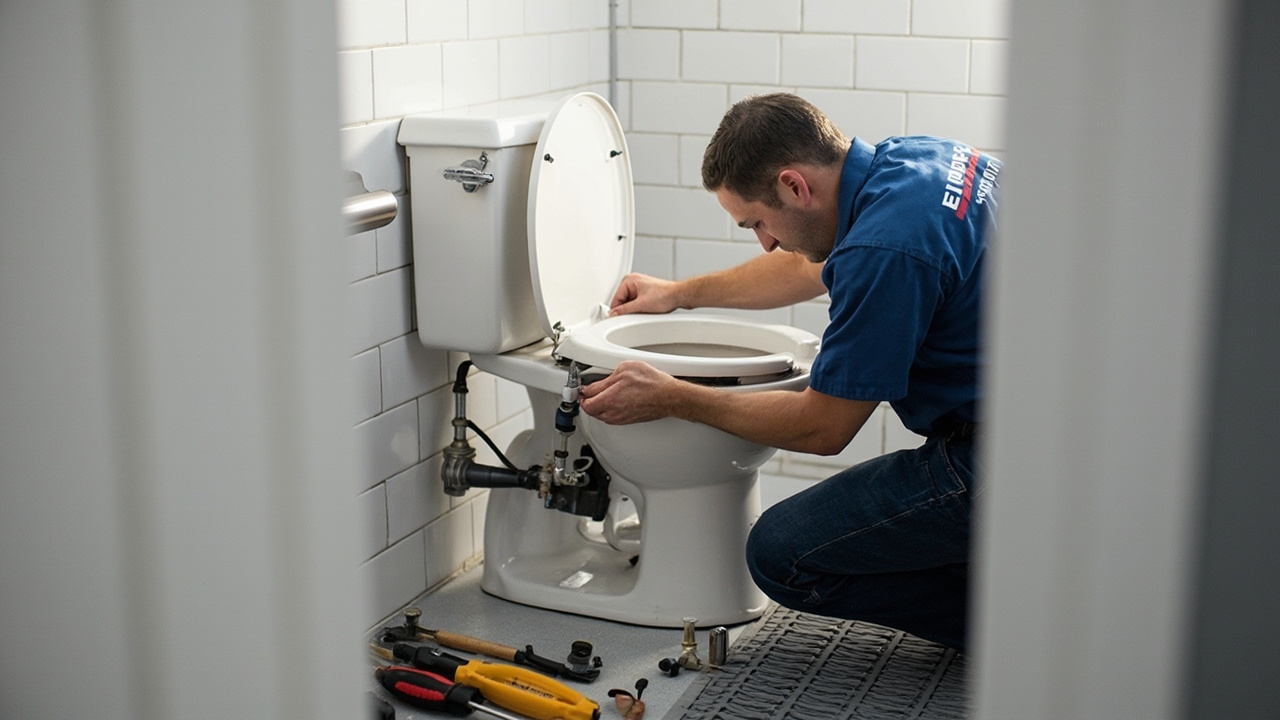
For flushometer repair, we stock Sloan, Zurn, and Chicago Faucets parts on our trucks. We replace diaphragm assemblies, rebuild vacuum breakers, and adjust flush timing to match your specific fixture requirements. If your facility uses sensor-activated fixtures, we calibrate infrared sensors and replace solenoid valves that fail from Atlanta's humidity-driven corrosion.

Commercial restroom fixture repair often requires coordination with your facility schedule. We work around your operational hours, whether that means early morning service calls before your staff arrives or after-hours work to avoid disrupting customer-facing businesses. For multi-stall facilities, we can repair sections incrementally to maintain partial restroom availability.

Industrial toilet repair services extend beyond the fixture. We address flange leaks caused by foundation settling common to Atlanta's clay soil, replace wax rings compromised by building movement, and repair flush valve connections that loosen from vibration. We also rebuild tank assemblies on older gravity-feed units still found in historic buildings throughout downtown and the Old Fourth Ward.

The goal is functional restoration with minimal operational interruption. We test every repair under full load conditions before leaving your facility.

What Happens During Your Commercial Restroom Repair

Commercial Toilet & Urinal Repair in Atlanta – Minimize Downtime with Industrial-Grade Solutions
01

Initial Assessment

We arrive with diagnostic tools to test water pressure, flush volume, and drainage flow rates. Our technician inspects each fixture, identifies failed components, and determines if you need repair or replacement. You receive a clear scope of work with expected completion time before we start any labor.
02

Component Replacement

We shut down individual fixtures, not entire restroom sections unless absolutely necessary. Our trucks carry common flushometer parts, flush valve assemblies, and urinal components for immediate replacement. We replace worn diaphragms, corroded vacuum breakers, and failed solenoid valves while maintaining your facility's operational capacity throughout the repair process.
03

Function Verification

Every repaired fixture undergoes full cycle testing. We verify proper flush volume, check for leaks at all connection points, and confirm that sensor activation meets your timing requirements. You receive documentation of all parts replaced and recommendations for preventing future failures. We clean the work area and ensure your restroom is customer-ready before we leave.

Why Atlanta Businesses Choose Elite Plumbing Atlanta

Commercial restroom failures do not wait for convenient timing. We maintain response availability that matches your business reality. When a restaurant in Buckhead loses restroom function during lunch service or an office building in Midtown faces fixture failures before a client meeting, response time determines revenue impact.

Our technicians understand Atlanta's commercial building stock. We have worked in everything from historic buildings along Auburn Avenue that still use original cast iron waste lines to new construction in Atlantic Station with modern sensor-activated fixtures. This experience means we arrive knowing what to expect from your building type and age.

We stock parts for commercial-grade fixtures because residential components fail immediately under commercial use patterns. Our inventory includes Sloan Royal, Regal, and Optima flushometers, Zurn manual and sensor flush valves, and Chicago Faucets commercial trim kits. This eliminates the parts-ordering delays that extend downtime and cost you money.

Local code compliance is not optional. Georgia requires backflow prevention on all commercial fixtures and specific flush volume limits for water conservation. We install only approved vacuum breakers and pressure-reducing valves that meet Atlanta's plumbing code. This protects you from inspection failures and potential fines.

We also understand the difference between customer-facing restrooms and employee facilities. Your priorities change based on location and visibility. We adjust our service approach to match your specific business requirements, whether that means cosmetic considerations for public spaces or pure functionality for back-of-house facilities.

What to Expect from Our Commercial Plumbing Service

Response Timing

We dispatch technicians based on your operational urgency. Customer-facing facilities get priority response because every hour of downtime affects your revenue. For multi-location businesses across metro Atlanta, we coordinate service timing across your properties to maximize efficiency. Most single-fixture repairs complete within two hours of arrival. Multi-fixture projects receive staged scheduling to maintain partial restroom availability throughout the repair process.

Diagnostic Process

You receive a complete evaluation before work begins. We test water pressure, measure flush performance, inspect supply lines for corrosion, and check drainage flow rates. This identifies underlying problems that cause repeated failures, not just the immediate symptom. You get a detailed explanation of what failed, why it failed, and what we recommend to prevent recurrence. No work starts without your approval of scope and cost.

Quality of Work

We install commercial-grade components designed for your usage volume. Every connection point gets tested under full pressure before we consider the job complete. Flushometer installations include proper vacuum breaker placement and pressure adjustment to prevent water hammer. Fixture repairs include gasket replacement at all seal points to eliminate leak potential. You receive restroom facilities that function reliably under your actual daily demand, not just during our test cycle.

Ongoing Support

Commercial fixtures require different maintenance than residential units. We provide documentation on adjustment procedures for sensor timing and flush volume calibration so your maintenance staff can handle minor issues. For facilities with chronic problems, we offer scheduled inspection services to catch failures before they affect your operations. You also receive priority callback scheduling if issues develop after our initial repair, eliminating the wait time that disrupts your business.

Frequently Asked Questions

You Have Questions,
We Have Answers

How to fix a commercial toilet that won't flush all the way? +

A commercial toilet that won't complete its flush cycle signals a failed flush valve, clogged rim jets, or weak water pressure. Check the flush valve diaphragm for cracks or mineral buildup. Atlanta's hard water accelerates calcium deposits that restrict flow. Inspect rim jets under the bowl rim for blockages. Test static water pressure at the supply line. Commercial fixtures require 25-35 PSI minimum for proper evacuation. If the flushometer shows erratic pressure or the valve seal leaks, replacement is necessary. Partial flushes in high-traffic facilities create liability issues and ADA compliance failures. Address the root cause immediately.

What is the most common toilet flush problem? +

The most common commercial toilet problem is a faulty flushometer diaphragm. High-volume facilities see thousands of flush cycles monthly. The rubber diaphragm degrades from constant pressure changes and mineral exposure. Atlanta's chlorinated municipal water compounds wear. You'll notice weak flushes, continuous running, or delayed activation. The diaphragm controls water release timing and volume. When it hardens or cracks, the flush valve cannot regulate flow properly. Replacing the diaphragm restores function without full valve replacement. In commercial settings, failed diaphragms mean ADA violations, water waste exceeding 500 gallons daily, and tenant complaints that disrupt business operations.

How much would it cost to fix a broken toilet flush? +

Do not expect fixed pricing for commercial toilet repairs. Costs vary by fixture type, access difficulty, and required parts. A simple flapper swap differs from flushometer valve overhaul or supply line replacement. Commercial-grade components cost more than residential parts but handle higher duty cycles. Factor in after-hours service if the failure disrupts operations. Atlanta building codes may require specific backflow prevention or water-saving upgrades during repairs. Request a diagnostic assessment first. The repair cost is negligible compared to water waste penalties, liability from ADA non-compliance, or lost revenue from closed restrooms. Budget for professional evaluation to prevent recurring failures.

How do you adjust the flush valve on a commercial toilet? +

Adjusting a commercial flush valve requires specific tools and manufacturer knowledge. Locate the adjustment screw on the flushometer body. Turn clockwise to reduce flush volume, counterclockwise to increase. Make quarter-turn increments and test. Atlanta facilities must balance water conservation mandates with effective waste removal. Over-tightening causes incomplete flushes and clogs. Insufficient flow violates plumbing code. Check the diaphragm condition before adjusting. A worn diaphragm won't hold settings. Measure flush volume with a bucket to verify compliance with 1.6 gallons per flush maximum. Incorrect adjustments void warranties and create maintenance cycles. Professional calibration ensures code compliance and operational efficiency.

How do I know if my fill valve or flapper is bad? +

A bad fill valve hisses constantly or fills slowly. A failed flapper allows water to seep into the bowl between flushes. Test by adding food coloring to the tank. If color appears in the bowl within 15 minutes without flushing, the flapper leaks. Fill valves show visible calcium buildup or fail to shut off completely. Atlanta's mineral-heavy water accelerates deterioration. In commercial settings, a leaking flapper wastes 200 gallons daily per fixture. Fill valve failure causes refill cycles exceeding two minutes. Both components have defined service lives based on flush frequency. Replace at failure rather than adjusting. Dual failures indicate systemic water quality issues.

Why put aluminum foil in a toilet tank? +

Aluminum foil in toilet tanks is a misguided home remedy with no commercial application. Some claim it prevents mineral buildup or improves flush pressure. It does neither. Foil fragments can lodge in fill valves or flappers, causing premature failure. In commercial facilities, foreign objects in tanks void warranties and violate health codes. Atlanta inspectors flag non-standard tank modifications. Address hard water with proper descaling agents or water softening systems. Maintain flush components through scheduled replacement, not improvised fixes. Professional maintenance protocols protect equipment longevity and code compliance. Foil creates problems rather than solving them.

Can you replace a flush valve without removing the tank? +

You cannot replace a flush valve without removing the tank on traditional gravity-fed toilets. The valve mounts through the tank bottom with a locknut accessible only from underneath. Tank removal is necessary for proper sealing and torque. Commercial flushometer systems differ. These pressure-assisted valves mount externally on the fixture or wall. You can replace flushometer components without tank access. The repair approach depends on fixture type. Atlanta's commercial buildings use both systems. Gravity units require full teardown. Flushometers allow component-level service. Attempting shortcuts on gravity systems guarantees leaks and water damage. Professional installation ensures watertight seals and code-compliant reinstallation.

Will hydrogen peroxide dissolve toilet paper? +

Hydrogen peroxide does not effectively dissolve toilet paper. It oxidizes organic matter slowly and lacks the mechanical action needed for paper breakdown. Commercial facilities experiencing frequent clogs need hydro-jetting or enzymatic treatments, not chemical experiments. Atlanta plumbing codes restrict certain drain cleaners in commercial buildings due to pipe corrosion and environmental discharge regulations. Toilet paper designed for septic systems breaks down naturally with adequate water flow. Persistent clogs indicate undersized drain lines, improper venting, or foreign objects. Hydrogen peroxide introduces unnecessary chemicals without addressing root causes. Professional diagnosis identifies whether you face hydraulic problems, paper quality issues, or user behavior requiring fixture upgrades.

What is the most common toilet repair? +

Flapper replacement is the most common residential toilet repair. Commercial facilities face different patterns. Flushometer diaphragm failure leads commercial repairs due to high cycle counts. Atlanta office buildings, restaurants, and retail spaces see thousands of daily flushes per fixture. The diaphragm handles pressure regulation and wears predictably. Second most common is flush handle assembly failure from heavy use and vandalism. Commercial-grade components endure more stress than residential equivalents. Scheduled replacement every 18-24 months prevents failures during business hours. Reactive maintenance costs triple compared to planned service. Track flush cycles and replace components before failure to maintain operational continuity and avoid emergency service premiums.

How much do plumbers charge to fix toilets? +

Plumbers charge commercial rates based on complexity, not flat fees. Expect higher costs than residential service due to specialized parts, after-hours requirements, and liability factors. Service calls start with diagnostic fees. Repairs range from minor component swaps to complete fixture replacement. Atlanta's commercial plumbing rates reflect licensing requirements, insurance mandates, and code compliance obligations. Emergency service commands premium pricing. Water damage from failed toilets costs exponentially more than preventive repairs. Budget for annual maintenance contracts that include inspections and priority response. Scheduled service costs less than reactive calls. Request itemized estimates covering labor, parts, and code-required upgrades before authorizing work.

How Atlanta's Water Quality Affects Commercial Flushometer Lifespan

Metro Atlanta's water supply comes primarily from the Chattahoochee River and Lake Lanier, creating mineral content that accelerates commercial flush valve deterioration. The calcium and magnesium deposits build up inside diaphragm assemblies and restrict the small orifices that control flush timing. This is why you see flushometers that start running continuously or lose flushing power after 18 months in high-use facilities. The problem intensifies in areas like Sandy Springs and Roswell where water hardness exceeds regional averages.

Elite Plumbing Atlanta has worked with commercial facilities throughout Fulton, DeKalb, and Cobb counties since our founding. We understand the specific challenges that Atlanta's building codes and water conditions create for commercial restroom maintenance. Our technicians carry parts inventory matched to the commercial fixture brands most common in Atlanta's office buildings, restaurants, and retail spaces. This local focus means we solve your problems faster than national service chains that stock generic components.
Plumbing Services in The Atlanta Area

Elite Plumbing is conveniently located to serve the greater Atlanta area. Whether you're looking to visit our office, need to understand our service radius, or simply want to know where we're based, our map provides a clear visual. We pride ourselves on being accessible to all our clients, ensuring prompt and efficient service delivery across the region for all your plumbing needs.

Address:
Elite Plumbing Atlanta, 434 Marietta St NW, Atlanta, GA, 30313

Additional Services We Offer

Our news updates

Latest Articles & News from The Blogs

How Gray Water Recycling Can Help You Maintain a Lush Garden in Palmetto Gray water recycling systems offer Palmetto homeowners…

How Gray Water Recycling Can Help You Maintain a Lush Garden in Palmetto

How Gray Water Recycling Can Help You Maintain a Lush Garden in Palmetto Gray water recycling systems offer Palmetto homeowners…

Comparing Navien and Rinnai Tankless Systems for Large Estates in Canton

Comparing Navien and Rinnai Tankless Systems for Large Estates in Canton Large estates in Canton require high-capacity tankless water heaters…

The Best Ultra-Quiet Toilets for High-Rise Living in Morrow

The Best Ultra-Quiet Toilets for High-Rise Living in Morrow Living in a high-rise apartment in Morrow means sharing walls floors…

Contact Us

Every hour your commercial restrooms stay out of service costs you money. Call Elite Plumbing Atlanta now at (770) 610-5522 for immediate commercial toilet and urinal repair. We dispatch technicians throughout metro Atlanta with the parts and experience to restore your facility today.