
Converting from Septic to City Sewer in Lithonia—What Homeowners Should Expect
Homeowners in Lithonia face a critical decision as aging septic systems fail and DeKalb County expands its sewer infrastructure. Converting from septic to city sewer eliminates costly maintenance and protects your property value. This guide breaks down the entire process so you know exactly what to expect. DeKalb County Department of Watershed Management.
Why Lithonia Homeowners Are Switching to City Sewer
The red clay soil in Lithonia creates unique challenges for septic systems. Heavy rainfall saturates the ground causing drain fields to fail. Many homes near Panola Mountain and along the Rockdale County line built before 1990 rely on outdated septic tanks that struggle with modern household water usage. DeKalb County Watershed Management has identified several Lithonia neighborhoods where septic failures threaten groundwater quality making sewer conversion mandatory in some areas. How to Deal with Main Sewer Line Clogs in Your Decatur Bungalow.
Property values increase significantly after conversion. Homes with city sewer connections sell faster and command higher prices because buyers avoid the liability of septic maintenance. The conversion also eliminates the risk of sewage backups during heavy storms which are common in Lithonia’s low-lying areas near creeks and streams.
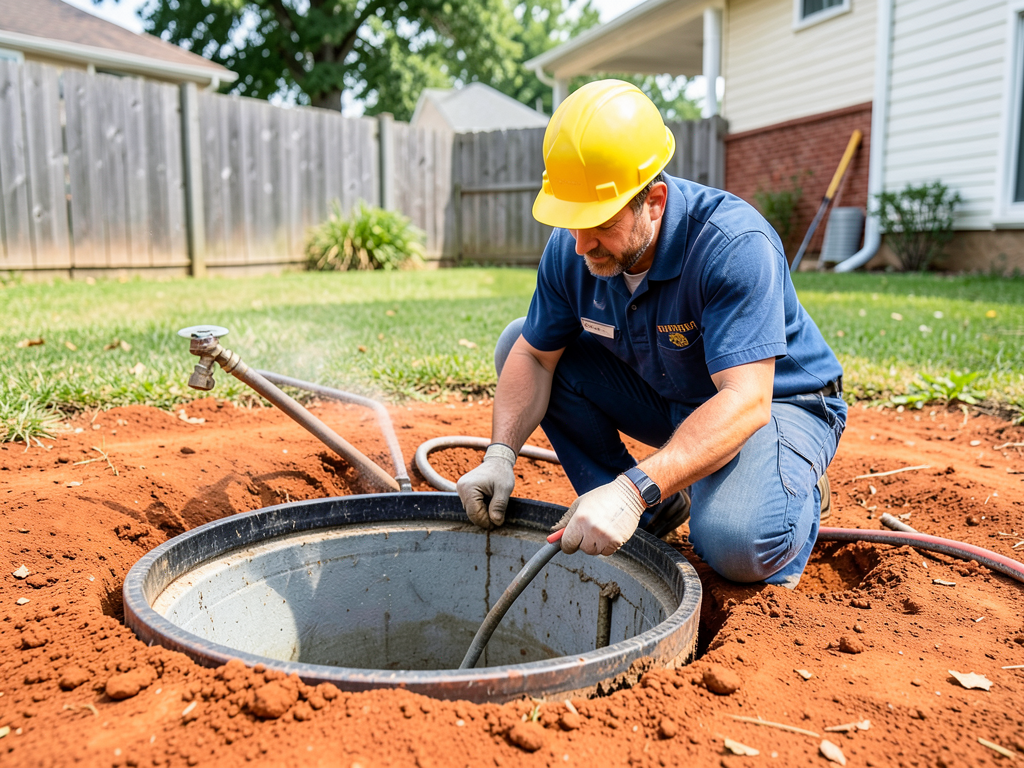
Technician examining septic tank before conversion showing signs of failure
The Conversion Process: From Permit to Connection
The septic to sewer conversion follows a five-step process that typically takes 2 to 4 days. First the DeKalb County Department of Watershed Management reviews your application and issues permits. This step alone can take 2 to 3 weeks depending on current workload. Next a licensed septic pumping company removes all waste from your existing tank. This prevents contamination during excavation. EPA septic system guidelines.
The third step involves either trenchless pipe installation or traditional excavation. Trenchless methods use directional boring to install the new sewer lateral without digging up your entire yard. This works well for properties with established landscaping or concrete driveways. Traditional excavation requires digging a trench from your home to the main sewer line typically 4 to 6 feet deep.
Once the new lateral line connects to the main sewer the old septic tank must be properly decommissioned. DeKalb County requires either complete removal or crushing and filling with sand or gravel. The final step involves pressure testing the new connection and restoring your property to its original condition.
- Permit Acquisition
Submit application to DeKalb County DWM including property survey and septic system location. Wait 2-3 weeks for approval.
- Septic Tank Pumping
Certified septic company pumps and removes all waste. This prevents contamination during excavation.
- Lateral Line Installation
Choose trenchless boring or traditional excavation based on property conditions and budget.
- Septic Tank Decommissioning
Remove tank completely or crush and fill per DeKalb County regulations.
- Final Connection and Testing
Connect to main sewer line perform pressure tests and restore property.
Local Regulations and DeKalb County Compliance
DeKalb County Watershed Management enforces strict regulations for septic to sewer conversions. The county requires a licensed master plumber to pull permits and oversee all work. According to DeKalb County Code Section 34-36-5 all septic tanks must be properly decommissioned to prevent future collapse or groundwater contamination.
The county mandates specific pipe materials for new sewer laterals. Schedule 40 PVC pipe with watertight connections meets current standards. The minimum pipe diameter is 4 inches for residential connections. All work must pass inspection by DeKalb County DWM before final approval.
Homeowners should expect tap-in fees ranging from $2,500 to $4,500 depending on property location and connection requirements. Properties in newly annexed areas may face additional infrastructure fees. The county also requires a post-connection inspection to verify proper decommissioning of the old septic system.. Read more about Why You Should Replace Your Stone Mountain Home’s Vertical Cast Iron Stack.

DeKalb County DWM inspector checking new sewer lateral connections
Estimated Costs and Factors Affecting Your Conversion
Several factors determine the total cost of converting from septic to city sewer in Lithonia. The distance from your home to the main sewer line directly impacts excavation costs. Properties within 50 feet of the main line typically cost $8,000 to $12,000 total. Homes requiring 100 feet or more of lateral line can exceed $15,000.
Soil conditions affect both timeline and cost. Lithonia’s red clay becomes extremely difficult to excavate when wet. Contractors may need specialized equipment or delay work during rainy seasons. Properties with rock shelves or tree root systems face additional challenges that increase labor hours.
Lawn restoration represents a significant portion of post-conversion costs. Trenchless methods minimize landscape damage but cost 20% to 30% more upfront. Traditional excavation requires sod replacement, reseeding, or professional landscaping to restore your yard. Driveway or sidewalk removal and replacement adds $2,000 to $5,000 if the sewer line crosses these surfaces.
| Conversion Factor | Cost Range | Impact Level |
|---|---|---|
| Distance to Main Line | $8,000 – $15,000+ | High |
| Trenchless vs Excavation | $10,000 – $18,000 | Medium |
| Lawn Restoration | $1,500 – $4,000 | Medium |
| Driveway/Sidewalk Work | $2,000 – $5,000 | Low |
Frequently Asked Questions
How long does the entire conversion process take?
The full process typically takes 2 to 4 days of active work plus 2 to 3 weeks for permit approval. Weather delays and unexpected underground obstacles can extend timelines. Most homeowners can expect completion within 30 days from start to finish.
Can I keep my septic tank after connecting to city sewer?
No. DeKalb County requires complete decommissioning of all septic systems connected to city sewer. Leaving an old septic tank in place creates safety hazards and potential groundwater contamination. The county mandates either full removal or crushing and proper filling.
Will my property be a mess during the conversion?
Traditional excavation creates significant disruption with trenches across your yard. Trenchless methods minimize surface damage but cost more. Professional contractors protect your property with barriers and cleanup daily. Most yards return to normal within 2 weeks after restoration work completes.
Do I need to be home during the conversion?
You must be available for the initial setup and final inspection. The work requires water service interruption for several hours during connection. Most homeowners schedule conversions during work hours and provide access codes or keys to contractors.
Completed sewer lateral connection ready for final inspection
Call (770) 610-5522 Today to Schedule Your Inspection
Converting from septic to city sewer represents a significant investment in your Lithonia home. The process requires technical expertise, proper permitting, and strict compliance with DeKalb County regulations. Don’t risk improper installation that could cost thousands in repairs or fines.
Our master plumbers have completed dozens of successful conversions throughout Lithonia and understand the unique challenges of red clay soil and local infrastructure. We handle everything from permit acquisition to final inspection so you can focus on enjoying your worry-free sewer connection. The Best Way to Handle a Gas Line Leak in Smyrna.
Pick up the phone and call (770) 610-5522 before the next heavy rain causes your failing septic system to back up into your home. The longer you wait the more expensive the conversion becomes.