
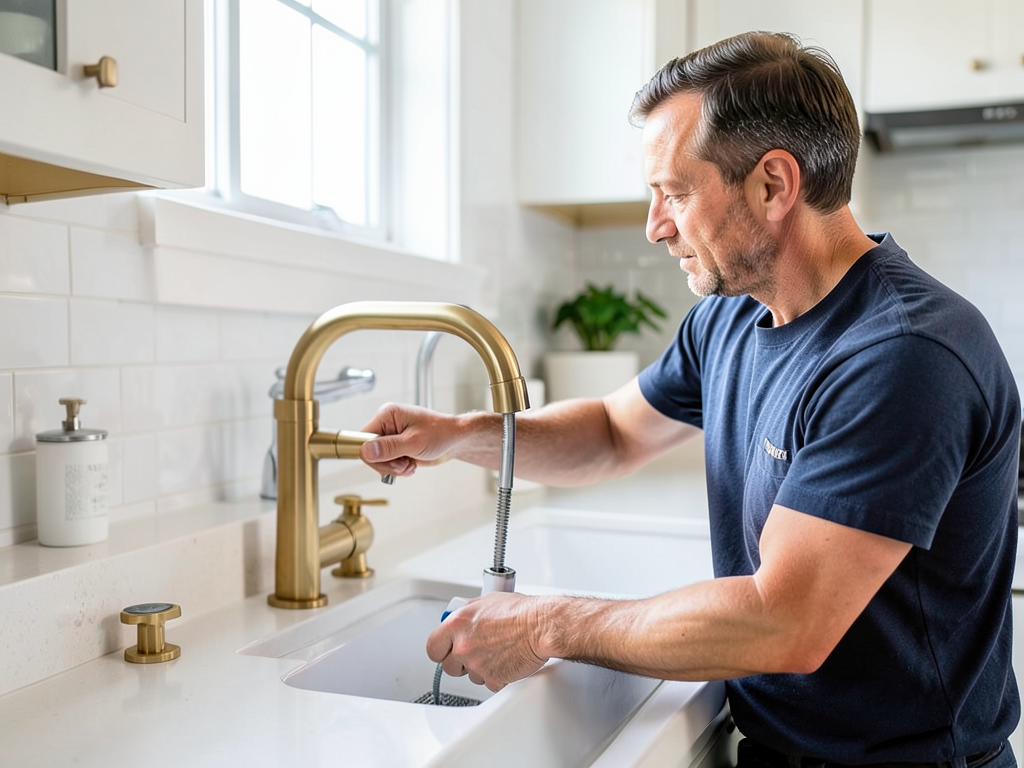
The Real Difference Between Cheap and Expensive Kitchen Faucets for Your Smyrna Home
Choosing a kitchen faucet in Smyrna means understanding more than just style and price. The right faucet handles Atlanta’s hard water, daily wear, and installation demands without failing after a year. This guide breaks down the real mechanical differences so you can avoid costly replacements and choose a fixture that lasts. The Best Way to Handle a Gas Line Leak in Smyrna.
Why Faucet Quality Matters Beyond the Price Tag
Professional plumbers see the same pattern: cheap faucets leak, corrode, or break within 2-3 years while quality models run for 10+ years with minimal maintenance. The difference comes down to internal components, materials, and finish technology. In Smyrna, where water contains moderate mineral content, these factors directly impact performance and longevity.. Read more about Choosing a High Performance Showerhead That Still Meets Georgia Water Flow Standards.
Internal Components: The Heart of Every Faucet
The valve mechanism determines how smoothly your faucet operates and how long it lasts. Cheap faucets typically use compression valves with rubber washers that wear out quickly. Quality faucets use ceramic disc valves that provide decades of drip-free operation.
Ceramic discs create a water-tight seal through two polished surfaces sliding against each other. They resist mineral buildup and maintain smooth operation even in hard water conditions. Compression valves rely on rubber washers that degrade from constant pressure and mineral deposits, leading to drips and eventual failure.
DIAGNOSTIC TEST: Feel the handle movement. A quality faucet moves smoothly with consistent resistance. Cheap models feel loose, gritty, or have noticeable play in the handle.
Body Materials: Brass vs. Zinc vs. Plastic
The faucet body material affects durability, corrosion resistance, and weight. Solid brass construction represents the gold standard for quality faucets. Brass resists corrosion, handles temperature changes without cracking, and provides the weight that signals quality construction.
Zinc alloy bodies cost less but corrode faster, especially in Atlanta’s mineral-rich water. Plastic bodies crack under temperature stress and cannot withstand the torque needed for proper installation. Some premium models use stainless steel for superior corrosion resistance and modern aesthetics.
THE SCREWDRIVER TEST: Unscrew the aerator. Brass bodies feel substantial and cool to the touch. Plastic feels warm and lightweight. Zinc feels cold but noticeably lighter than brass.
Finish Technology: PVD vs. Chrome vs. Painted
Finish durability determines how your faucet looks after years of use. Physical Vapor Deposition (PVD) finishes bond at the molecular level, creating surfaces that resist scratches, corrosion, and mineral buildup. Chrome plating provides good durability at a lower cost but can pit over time.
Painted or powder-coated finishes chip easily and cannot withstand daily cleaning. In Smyrna homes, where water contains dissolved minerals, PVD finishes maintain their appearance while cheaper finishes show water spots and corrosion within months.
According to the International Association of Plumbing and Mechanical Officials (IAPMO) standards, PVD finishes must withstand 100 hours of salt spray testing without showing corrosion. This matters in Atlanta’s humid climate where moisture accelerates finish degradation. IAPMO standards.
Brand Comparison: What You Actually Get
Professional plumbers categorize faucet brands by component quality and reliability. Understanding these tiers helps you make informed decisions based on your needs and budget.
| Brand Tier | Examples | Key Features | Typical Lifespan |
|---|---|---|---|
| Luxury | Brizo, Grohe, Hansgrohe | Solid brass, PVD finish, ceramic disc valves | 15-20 years |
| Premium | Kohler, Delta, Moen | Brass body, ceramic valves, PVD or chrome | 10-15 years |
| Mid-Range | Kraus, Pfister | Zinc body, ceramic valves, chrome finish | 5-10 years |
| Budget | Glacier Bay, store brands | Plastic or zinc, compression valves | 2-5 years |
Atlanta Water Conditions and Faucet Performance
Atlanta’s water supply comes from surface sources that contain varying mineral levels. The Georgia Environmental Protection Division monitors water quality across Metro Atlanta, with most areas showing moderate hardness between 3-7 grains per gallon. Georgia Environmental Protection Division.
This mineral content affects faucet performance differently based on construction. Ceramic disc valves resist mineral buildup better than rubber washers. PVD finishes prevent water spots that plague chrome or painted surfaces. Solid brass resists galvanic corrosion that occurs when dissimilar metals contact in the presence of minerals.
LOCAL CONSIDERATION: Homes near the Chattahoochee River corridor often experience slightly higher mineral content due to natural limestone deposits. Faucets in these areas benefit from PVD finishes and ceramic valves.
Flow Rates and Water Conservation
Federal regulations limit kitchen faucets to 2.2 gallons per minute (GPM) maximum flow rate. Quality manufacturers achieve this rate while maintaining strong spray performance through better aerator design and internal engineering.
Cheap faucets often struggle to maintain 2.2 GPM due to poorly designed flow restrictors or internal corrosion that restricts water passage. Quality models use precision-engineered aerators that mix air with water to maintain pressure while meeting conservation standards.
The EPA WaterSense program certifies faucets that perform at 1.5 GPM or less while meeting strict performance criteria. These models save water without sacrificing functionality, particularly important in Metro Atlanta where water conservation matters. EPA WaterSense program.
Installation Complexity and Professional Labor
Professional installation ensures proper sealing, prevents leaks, and protects your investment. Quality faucets require precise torque specifications and proper sealing techniques that prevent future problems.
Cheap faucets often have poorly machined threads or inconsistent dimensions that make proper installation difficult. This leads to leaks, stripped connections, or premature failure. Professional plumbers charge more for installing quality faucets because they take time to ensure everything fits correctly and functions properly.
THE INSTALLATION TEST: A quality faucet should install smoothly without forcing connections. Threads should engage cleanly, and components should align properly without excessive pressure.
Warranty and Repairability Factors
Warranty coverage reflects manufacturer confidence in their products. Quality brands offer lifetime warranties on finish and function, covering replacement parts and sometimes labor. Budget brands provide limited warranties that exclude common failure points.
Repairability matters when problems occur. Quality brands stock parts at local Atlanta plumbing supply houses, allowing same-day repairs. Budget brands often require ordering parts that take weeks to arrive, leaving you without a functioning kitchen during that time. Plumbing Decatur.
Delta Faucet Company and Moen maintain extensive distribution networks in Georgia, with parts available through multiple Atlanta-area suppliers. This accessibility reduces repair time and costs when service is needed.
Cost Analysis: Initial Price vs. Lifetime Value
A $200 faucet that lasts 15 years costs about $13 per year. A $50 faucet lasting 3 years costs $17 per year, plus the cost and inconvenience of replacement. Quality faucets often pay for themselves through durability and reduced maintenance.
Consider installation costs as part of the total investment. Professional installation for a quality faucet might cost $150-300, while budget faucet installation might cost $100-200. The higher installation cost for quality models reflects the care needed to protect your investment.
Water damage from failed cheap faucets can cost thousands in repairs. Quality faucets include features like reinforced supply lines and improved sealing that prevent these costly failures.
Making the Right Choice for Your Smyrna Home
Choose based on your priorities and budget. If you plan to stay in your home long-term or value reliability, invest in quality construction with ceramic valves and solid brass bodies. If you need a temporary solution or have budget constraints, select a mid-range model with ceramic valves from a reputable brand.
Avoid the cheapest options regardless of your budget. These models use the lowest-quality components and provide the worst long-term value. The difference between a $50 and $100 faucet often represents a significant jump in quality and reliability.
Consider your home’s style and usage patterns. High-traffic kitchens benefit from quality construction that withstands daily use. Secondary sinks or rental properties might justify mid-range options that balance cost and reliability.
Professional Installation Benefits
Professional installation prevents common problems that void warranties and cause failures. Plumbers ensure proper sealing, check for leaks, and verify that all components function correctly before completing the job.
Quality installation includes checking water pressure, verifying supply line connections, and testing all functions. This attention to detail prevents the slow leaks and drips that waste water and cause damage over time.
Professional plumbers also handle unexpected issues like corroded shut-off valves or misaligned sink holes that complicate DIY installations. Their experience prevents damage to your new faucet and ensures proper function from day one.
Maintenance and Care for Longevity
Quality faucets require minimal maintenance but benefit from proper care. Clean with mild soap and water, avoiding abrasive cleaners that can damage finishes. Wipe dry after use to prevent water spots, especially in areas with hard water.
Periodically check for leaks around the base and under the sink. Address small drips immediately to prevent water damage and wasted resources. Quality faucets make this easier by providing clear access to internal components.
Know your faucet’s model number and keep warranty information accessible. This speeds up service calls and ensures you receive proper support if problems develop.
Frequently Asked Questions
How long should a quality kitchen faucet last?
A quality kitchen faucet with ceramic disc valves and solid brass construction typically lasts 10-20 years with proper maintenance. The finish may show wear before the internal components fail.
Are expensive faucets worth the cost?
Yes, for most homeowners. Quality faucets cost more upfront but save money through durability, reduced maintenance, and prevention of water damage. They also provide better daily performance and reliability.
What’s the most important feature to look for?
Ceramic disc valves represent the most important feature. They provide drip-free operation, resist mineral buildup, and last significantly longer than compression valves with rubber washers.
Ready to Upgrade Your Kitchen Faucet?
Don’t let a failing faucet waste water and damage your home. Call (770) 610-5522 today to schedule a professional faucet evaluation and installation. Our experienced plumbers serve Smyrna and all Metro Atlanta communities with quality workmanship and reliable service.
Pick up the phone and call (770) 610-5522 before the next drip becomes a flood. We’ll help you choose the right faucet for your needs and ensure professional installation that protects your investment.
Need emergency service? Our team responds quickly to prevent water damage and restore your kitchen’s functionality. Don’t wait for a small problem to become a major repair. Who to Call for an Emergency Pipe Burst in Buckhead.
You may also find this helpful. How to Remove Tough Limescale Buildup from Your Marietta Shower Heads.