
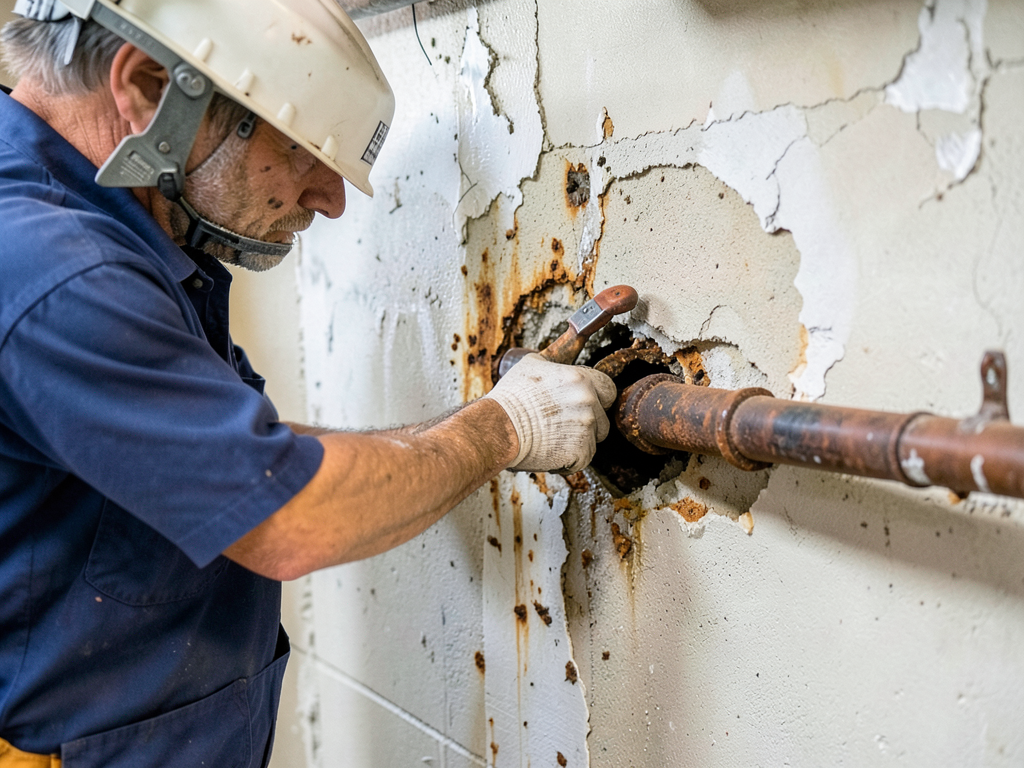
Why You Should Replace Your Stone Mountain Home’s Vertical Cast Iron Stack
If your Stone Mountain home was built between 1950 and 1980, your vertical cast iron stack is likely approaching the end of its 50-60 year lifespan. The humid Georgia climate and acidic red clay soil accelerate corrosion in these older pipes, creating serious health and property risks. A failing stack doesn’t just cause slow drains—it can lead to raw sewage backups, toxic gas leaks, and catastrophic water damage. Georgia State Minimum Standard Plumbing Code.
Stone Mountain’s mid-century housing stock faces unique challenges. The combination of Georgia’s freeze-thaw cycles, high humidity, and the area’s dense clay soil creates perfect conditions for cast iron pipe deterioration. When these pipes fail, they don’t just leak—they can collapse entirely, requiring emergency replacement that costs significantly more than planned upgrades. Who to Call for an Emergency Pipe Burst in Buckhead.
Replacing your vertical cast iron stack with modern PVC or ABS piping isn’t just a plumbing upgrade—it’s a critical investment in your home’s safety and value. Modern materials resist corrosion, handle Georgia’s temperature swings better, and meet current DeKalb County plumbing codes. The replacement process typically takes 2-3 days and can prevent thousands in potential water damage and health hazards. The Best Way to Handle a Gas Line Leak in Smyrna.
Signs Your Stone Mountain Home’s Cast Iron Stack Is Failing
Cast iron stacks fail gradually, giving warning signs that homeowners often miss until it’s too late. The most obvious indicator is the smell—a persistent rotten egg odor near drains or in your basement indicates sewer gas escaping through cracks in your stack. This isn’t just unpleasant; it’s a serious health hazard containing methane and hydrogen sulfide. What to Do When Your Marietta Basement Starts Flooding.
Listen for gurgling sounds in your drains, especially after flushing toilets or running washing machines. This indicates air trapped in corroded pipes, a sign that your stack’s internal diameter has narrowed due to mineral buildup and corrosion. You might also notice slow drains throughout your home—not just one fixture, but multiple bathrooms and the kitchen showing sluggish performance.
Visual inspection reveals more clues. Look for water stains on basement walls or ceilings directly below bathrooms. Check for rust-colored water when you first turn on a faucet. Feel for warm spots on walls or floors—this could indicate hot water leaking from a cracked stack. In crawl spaces, you might see actual pipe sections that have corroded through, leaving jagged edges where metal has flaked away.
The age of your home provides the biggest clue. Stone Mountain homes built during the post-war boom used cast iron extensively because it was the standard material before PVC became available in the 1970s. If your home is 40-70 years old and still has original plumbing, your stack is living on borrowed time. Plumbing Decatur.
The Cast Iron Stack Replacement Process
Professional stack replacement follows a systematic approach that minimizes disruption while ensuring code compliance. The process begins with a video camera inspection to assess the stack’s condition and identify any hidden damage in connecting lines. This diagnostic step shows exactly where corrosion has occurred and whether sections need partial or complete replacement.
Before work begins, your plumber obtains necessary permits from DeKalb County. The county requires inspections at multiple stages—before demolition, after new piping installation, and final approval. This ensures your replacement meets current Georgia State Minimum Standard Plumbing Code requirements, including proper venting and cleanout access.
The actual replacement involves carefully removing sections of the old stack, often working floor by floor to minimize mess. Technicians use specialized tools to cut through cast iron without damaging surrounding structures. As they remove each section, they inspect the wall cavities and floor penetrations for additional damage that might need repair. EPA WaterSense Program.
Modern PVC Schedule 40 piping replaces the old cast iron. This material resists corrosion, handles temperature changes better, and weighs significantly less than cast iron. The new stack includes updated fittings that prevent the channeling and buildup common in older systems. Technicians also install new cleanouts at strategic locations, making future maintenance much easier.
After installation, the system undergoes pressure testing to ensure all connections are watertight. The final inspection verifies proper slope, venting, and that all work meets DeKalb County standards. Most homeowners are surprised at how quickly the process moves—typically 2-3 days for a single-story home, 3-5 days for multi-story properties.
Why Stone Mountain Homes Face Unique Stack Challenges
Stone Mountain’s geology creates specific problems for cast iron plumbing. The area’s red clay soil contains high mineral content that accelerates corrosion when moisture is present. Unlike sandy soils that drain quickly, Georgia clay retains water against pipe surfaces, creating constant moisture exposure that eats away at cast iron over decades.
The region’s climate compounds these issues. Summer humidity levels often exceed 80%, causing condensation on cold water pipes inside walls. This moisture, combined with the clay soil’s acidity, creates a perfect corrosion environment. Winter freeze-thaw cycles cause pipes to expand and contract, creating microscopic cracks that allow moisture infiltration.
Stone Mountain’s elevation changes also affect plumbing. Homes built on slopes experience different pressure dynamics than flat properties. Water seeks the lowest point, creating additional stress on vertical stacks in hillside homes. The area’s bedrock, while providing stable foundations, also means pipes must navigate through dense material during installation, creating potential weak points.
Many Stone Mountain homes were built during rapid post-war development when building codes were less stringent. Original stacks might lack proper cleanouts, adequate venting, or the slope required for efficient drainage. These deficiencies become apparent only when problems arise decades later.
The area’s mature tree canopy creates another challenge. Tree roots seek water sources and can penetrate small cracks in aging cast iron. Once inside, roots expand and cause blockages or complete pipe separation. This is particularly common in older neighborhoods near Stone Mountain Park where large trees have had decades to grow.
Cost Factors and Investment Considerations
Stack replacement costs vary significantly based on your home’s configuration and the extent of work needed. Single-story ranch homes typically cost less to service than multi-story colonials because there’s less vertical piping to replace. Homes with finished basements require more careful demolition and repair work, increasing labor costs.
Accessibility dramatically affects pricing. A stack running through an unfinished basement with exposed framing costs less to replace than one hidden behind finished walls and ceilings. Some homeowners choose to open walls strategically during replacement, allowing for pipe access while planning for cosmetic repairs they can handle themselves.
The choice between traditional excavation and trenchless methods impacts both cost and timeline. Traditional methods require more demolition but cost less per linear foot. Trenchless epoxy lining works well for minor corrosion but can’t fix structural failures, making it unsuitable for severely damaged stacks.
Consider the long-term value when evaluating costs. A failing stack can cause tens of thousands in water damage if it collapses during a homeowner’s absence. Insurance might not cover damage from neglected maintenance, making preventive replacement a smart financial decision. Modern PVC stacks also improve your home’s marketability and inspection results.
Many homeowners finance stack replacement through home equity loans or specialized plumbing financing programs. The investment typically returns through prevented damage, improved efficiency, and increased property value. Some utility companies offer rebates for upgrading to water-efficient fixtures that often accompany stack replacement projects.
Comparing Cast Iron vs. Modern Materials
| Material | Lifespan | Corrosion Resistance | Installation Cost | Maintenance Needs |
|---|---|---|---|---|
| Cast Iron | 50-60 years | Poor – severe corrosion over time | $$ – requires specialized tools | High – frequent cleaning needed |
| PVC Schedule 40 | 100+ years | Excellent – immune to corrosion | $ – standard plumbing materials | Low – smooth interior prevents buildup |
| ABS | 75-100 years | Very Good – chemical resistant | $ – slightly higher than PVC | Very Low – impact resistant |
Frequently Asked Questions
How long does cast iron stack replacement take?
Most single-story homes require 2-3 days for complete stack replacement. Multi-story homes typically need 3-5 days. The timeline includes demolition, new pipe installation, pressure testing, and final inspections. Weather rarely affects indoor work, but material delivery delays can extend schedules.
Do I need to leave my home during replacement?
You can usually stay home during stack replacement, though water service will be interrupted for 6-8 hours during the transition. Some homeowners temporarily relocate if they have medical equipment requiring continuous water access or if they prefer to avoid construction noise and dust.
Will my homeowner’s insurance cover stack replacement?
Standard policies typically don’t cover stack replacement since it’s considered maintenance rather than sudden damage. However, if your stack fails and causes water damage, the damage might be covered while the pipe itself isn’t. Check your specific policy or consult with your insurance agent.
What permits are required in DeKalb County?
DeKalb County requires plumbing permits for stack replacement, with inspections at rough-in, before concealment, and final stages. The county follows Georgia State Minimum Standard Plumbing Code, which mandates specific venting requirements, cleanout placement, and material specifications that differ slightly from neighboring counties.
Can I replace just part of my stack instead of the whole thing?
Partial replacement is possible but often becomes more expensive long-term. If corrosion is visible in accessible areas, the rest of the stack likely has similar deterioration hidden from view. Complete replacement ensures uniform material, consistent performance, and avoids future emergency repairs in already-finished areas.
Protecting Your Investment
After stack replacement, proper maintenance extends your new system’s life and prevents future problems. Schedule annual plumbing inspections to check for leaks, proper venting, and fixture connections. Clean your main line every 2-3 years to prevent root intrusion and buildup, especially if your property has large trees.
Monitor your water bill for unexpected increases, which often indicate hidden leaks. Listen for changes in drain sounds—new gurgling or slow drainage suggests developing problems. Keep gutters clean and direct downspouts away from your foundation to reduce soil moisture around underground pipes.
Consider whole-house water filtration if you have hard water. Mineral buildup can reduce pipe diameter over time, decreasing efficiency even in modern materials. Water softeners prevent scale formation but require regular maintenance and salt replenishment.
Document your replacement project with photos and keep all permits and inspection reports. This documentation helps with future home sales and proves you’ve maintained the property properly. Many buyers appreciate seeing recent major system upgrades, as it reduces their perceived risk.
Stack replacement also presents an opportunity to upgrade other plumbing components. Consider replacing old supply lines, updating fixtures to water-efficient models, or adding a whole-house shutoff valve for emergency situations. These upgrades often cost less when done during the main project due to shared access and labor.
Why Professional Installation Matters
Cast iron stack replacement requires expertise that goes beyond basic plumbing skills. The work involves structural modifications, code compliance, and understanding how different building materials interact. Professional plumbers know how to minimize damage to finished surfaces, navigate complex building codes, and ensure proper system integration.
DIY or handyman attempts often create bigger problems. Incorrect pipe sizing causes drainage issues. Poor venting leads to sewer gas infiltration. Improper slope prevents proper waste flow. These mistakes might not show immediately but cause expensive problems within months or years. How to Deal with Main Sewer Line Clogs in Your Decatur Bungalow.
Professional installation includes warranty protection. Most reputable plumbers offer 1-2 year warranties on labor and 10+ year warranties on materials. This coverage protects your investment if problems develop. DIY work typically voids any existing home warranties and creates liability issues if you sell your home.
Experienced plumbers also understand local conditions. They know which materials perform best in Georgia’s climate, understand DeKalb County’s specific requirements, and can recommend solutions based on your home’s unique configuration. This local expertise prevents costly mistakes and ensures your system works efficiently for decades.
Don’t wait for a catastrophic failure. If your Stone Mountain home is over 40 years old and still has original cast iron plumbing, schedule a professional inspection today. Early detection and planned replacement costs significantly less than emergency repairs and prevents the stress of unexpected failures.
Call (770) 610-5522 today to schedule your inspection. Our team has served Stone Mountain homeowners for over 15 years, handling everything from minor repairs to complete system replacements. We’ll assess your current stack, explain your options clearly, and provide a detailed plan that fits your budget and timeline.
Pick up the phone and call (770) 610-5522 before the next storm hits. Don’t let a failing cast iron stack turn into a flooded basement or a backed-up sewer line. Your home deserves professional care from plumbers who understand Stone Mountain’s unique challenges and building requirements.