
Choosing the Right Water Heater for Your Vinings Home
Vinings homeowners face a critical decision when their water heater nears the end of its life. The choice between tankless and traditional tank water heaters impacts your monthly utility bills, available storage space, and how long you can enjoy hot showers. Atlanta’s unique water conditions and energy costs make this decision even more important for local residents. Atlanta Gas Light rebates.
Traditional tank water heaters store 40 to 80 gallons of hot water and keep it heated continuously. Tankless units heat water on demand as it flows through the system. Both technologies have evolved significantly in recent years, but each serves different household needs. The right choice depends on your family size, budget, and how long you plan to stay in your Vinings home. Getting Your Tankless Water Heater Fixed Fast in Sandy Springs.
Before diving into the details, here’s the bottom line: If you have a large family that uses hot water throughout the day, a tankless system could save you $100 to $200 annually on energy bills. However, the higher upfront installation cost means you’ll need to stay in your home for at least 5 to 7 years to see the return on investment. For smaller households or those planning to move soon, a traditional tank remains the most cost-effective option.. Read more about The Best Way to Flush Your Tankless Water Heater in Tuxedo Park.
Quick Comparison: Tank vs. Tankless Water Heaters
| Feature | Traditional Tank | Tankless |
|---|---|---|
| Initial Cost | $1,200 – $2,500 | $2,500 – $4,500 |
| Lifespan | 10-15 years | 20+ years |
| Space Required | 16-30 sq ft | 2-4 sq ft wall-mounted |
| Monthly Energy Use | $30 – $50 | $20 – $35 |
| Hot Water Supply | Limited by tank size | Unlimited |
| Maintenance | Annual flushing | Annual flushing + descaling |
Traditional Tank Water Heaters: The Reliable Standard
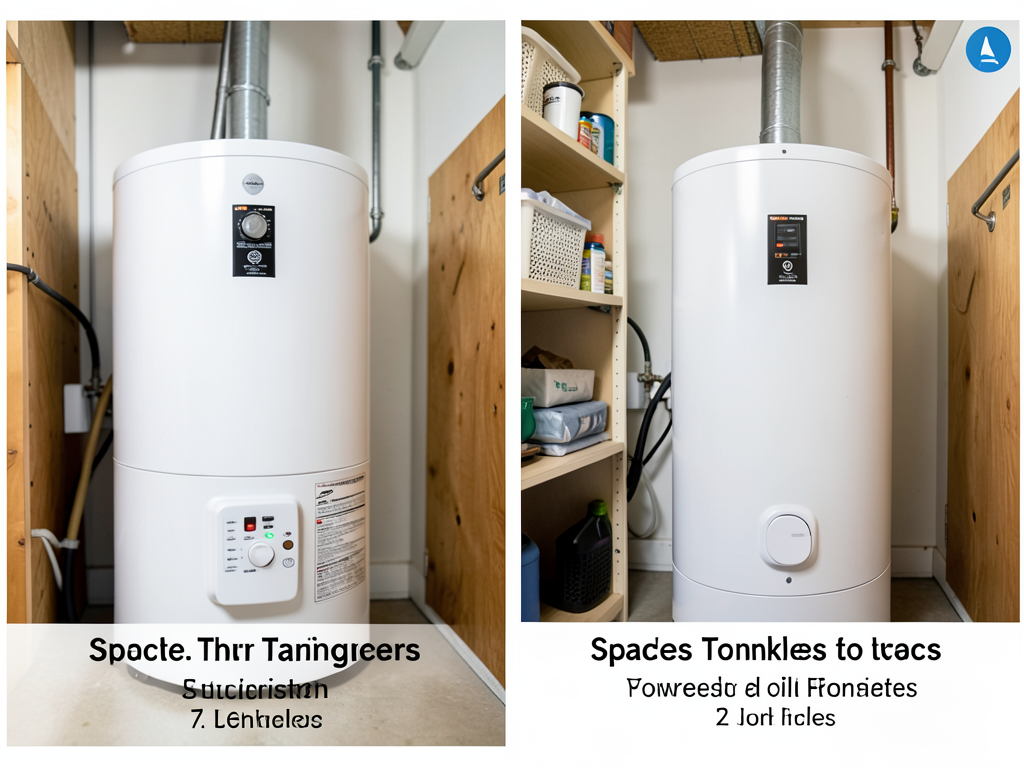
Traditional tank water heaters have served Atlanta homes reliably for decades. These units heat and store water in an insulated tank, maintaining temperature 24/7. When you turn on a hot water tap, preheated water flows from the tank to your faucet.
The technology works through a simple process. A gas burner or electric element heats the water at the bottom of the tank. As water heats, it rises to the top where it’s ready for use. A thermostat monitors temperature and activates heating when water cools below the set point.
Modern tanks offer improved efficiency through better insulation and smart controls. Many units now include vacation modes that reduce energy consumption when you’re away. The average 50-gallon tank provides enough hot water for most families of four to six people for daily activities.. Read more about What North Buckhead Families Need to Know About Installing a Hot Water Recirculating Pump.
Installation typically takes 2 to 4 hours for a straightforward replacement. Plumbers can usually swap a failing unit with a new one of the same size without major modifications to your home’s plumbing or electrical systems. Plumbing Decatur.
Traditional Tank Advantages
- Lower Initial Cost: Installation runs $1,200 to $2,500 including labor and the unit. This makes it accessible for most budgets.
- Simple Repairs: Parts are widely available and most plumbers can fix common issues quickly. A failed thermostat or heating element costs $150 to $300 to replace.
- No Power Required: Gas models continue working during power outages, providing hot water when you need it most.
- Proven Technology: Decades of refinement mean fewer surprises and well-understood performance characteristics.
Traditional Tank Disadvantages
- Limited Supply: Once the tank empties, you must wait 30 to 60 minutes for reheating. Back-to-back showers or running multiple hot water appliances simultaneously can deplete the supply.
- Higher Energy Bills: Standby heat loss occurs constantly as the unit maintains temperature. This wastes energy when you’re sleeping or away from home.
- Space Requirements: The bulky tank needs dedicated floor space, often in a utility closet or garage. This can be problematic in smaller Vinings homes.
- Shorter Lifespan: Most tanks last 10 to 15 years. Hard Atlanta water can reduce this to 8 to 12 years due to mineral buildup.
Tankless Water Heaters: On-Demand Efficiency
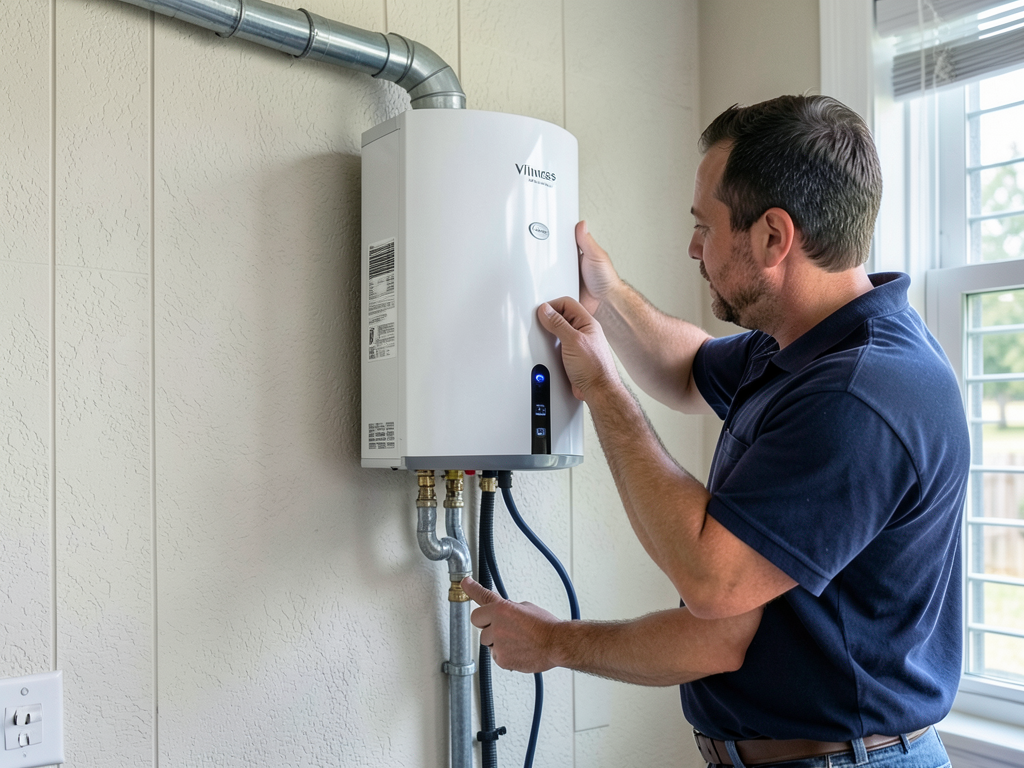
Tankless water heaters heat water instantly as it flows through the unit. When you turn on a hot water tap, cold water travels through a heat exchanger where gas burners or electric elements rapidly raise the temperature. The system shuts off when you close the tap, eliminating standby energy loss.
These units measure water flow and adjust heating power accordingly. A family running multiple showers simultaneously needs a unit capable of delivering 5 to 7 gallons per minute at the desired temperature rise. Professional sizing ensures the system meets your household’s peak demand.
Modern tankless systems include advanced features like digital temperature controls, self-diagnostic systems, and Wi-Fi connectivity. Some models allow you to adjust temperature from your smartphone or monitor energy usage patterns.
Installation complexity varies significantly. Gas units require proper venting and may need upgraded gas lines. Electric models need adequate electrical service and might require a new dedicated circuit. Both types need freeze protection in Atlanta’s occasional cold snaps.
Tankless Advantages
- Endless Hot Water: As long as water flows, the system produces hot water. Large families can run multiple showers, laundry, and dishwashers without running out.
- Energy Savings: Eliminating standby heat loss reduces energy consumption by 24% to 34% for homes using less than 41 gallons daily. Annual savings of $100 to $200 are typical.
- Space Savings: Wall-mounted units free up floor space. The compact design works well in Vinings condos and smaller homes where every square foot matters.
- Longer Lifespan: With proper maintenance, tankless units last 20+ years. The heat exchanger is the only major component that might need replacement.
Tankless Disadvantages
- Higher Upfront Cost: Units cost $1,000 to $2,500, and installation runs $1,500 to $2,000. Complex retrofits can push total costs to $4,500 or more.
- Installation Complexity: Gas units need proper venting through the roof or exterior wall. Electric models require adequate electrical service. Both may need upgraded plumbing lines.
- Maintenance Requirements: Annual descaling prevents mineral buildup that reduces efficiency. In Atlanta’s hard water areas, this maintenance becomes even more critical.
- Limited Output: Extremely high demand can overwhelm a single unit. Large homes might need multiple units or a hybrid system.
Atlanta-Specific Factors to Consider
Vinings residents face unique challenges that affect water heater performance and longevity. Atlanta’s water contains moderate hardness levels, typically 20 to 50 parts per million. While not extreme, this mineral content accumulates in both tank and tankless systems over time.
The Georgia State Minimum Standard Plumbing Code requires specific installation practices. Section 603.2 mandates pressure relief valves on all water heaters, while Section 604.1 addresses combustion air requirements for gas-fired units. Local jurisdictions like Cobb County may have additional permitting requirements. Georgia Power incentives.
Atlanta’s climate creates seasonal performance variations. Summer humidity can cause condensation on cold water lines, leading to corrosion if not properly insulated. Winter temperatures occasionally drop below freezing, requiring freeze protection for outdoor units or those in unheated spaces.
Local utility rebates can offset some costs. Atlanta Gas Light offers rebates up to $300 for high-efficiency gas water heaters. Georgia Power provides incentives for electric heat pump water heaters, which combine tank storage with heat pump efficiency.
Water quality testing reveals important information about your specific location. Homes near the Chattahoochee River corridor often experience different mineral content than those in higher elevations. A simple water test costs $50 to $100 and helps determine the right maintenance schedule.. Read more about PEX vs Copper—Deciding on the Right Piping for Your Summerhill Renovation.
Cost Analysis: Upfront Investment vs. Long-Term Value
Understanding the total cost of ownership requires looking beyond the initial purchase price. Traditional tanks cost less upfront but may need replacement twice during the lifespan of a single tankless unit.
Installation costs vary based on your home’s configuration. A straightforward tank replacement in a Vinings ranch home might cost $1,800 total. Converting from a tank to tankless in the same home could run $3,500 to $4,500 due to venting and gas line modifications.
Energy costs in Georgia average $0.12 per kilowatt-hour for electricity and $1.50 per therm for natural gas. These rates affect operating costs differently for each technology. Electric tankless units may require 120 to 150 amps of service, potentially necessitating electrical panel upgrades.
Maintenance costs also differ significantly. Traditional tanks need annual flushing to remove sediment, costing $100 to $150 per service. Tankless units require descaling every 12 to 24 months in Atlanta’s water conditions, with service costs ranging from $150 to $250.
Replacement timing affects the financial equation. If you plan to stay in your Vinings home for 10+ years, the tankless unit’s energy savings and longer lifespan often justify the higher initial investment. For shorter stays, the traditional tank’s lower upfront cost makes more financial sense.
Consider this scenario: A family of four uses 60 gallons of hot water daily. A traditional 50-gallon gas tank costs $2,000 installed and uses $35 monthly in gas. A comparable tankless unit costs $3,500 installed and uses $25 monthly. Over 10 years, the tankless saves $1,200 in energy costs, nearly offsetting the $1,500 price difference.
Making the Right Choice for Your Family
Your household’s specific needs should drive the decision. Consider these factors when choosing between tank and tankless water heaters for your Vinings home.
Family size matters significantly. A household of one or two people using minimal hot water might save more with a tankless unit due to lower standby losses. Large families benefit from tankless’s unlimited supply but may need multiple units to meet peak demand.
Available space influences the decision. Tankless units free up valuable floor space in utility closets, garages, or basements. If you’re tight on storage in your Vinings home, the space savings alone might justify the upgrade. What to Do When Your Marietta Basement Starts Flooding.
Future plans affect the calculation. Planning to stay in your home for 7+ years? Tankless becomes more attractive as energy savings accumulate. Moving within a few years? The traditional tank’s lower upfront cost makes more sense.
Water quality impacts maintenance needs. Homes with older plumbing or known sediment issues might benefit from tankless’s ability to filter water as it passes through. However, these same conditions require more frequent descaling maintenance.
Environmental considerations play a role for many homeowners. Tankless units produce fewer greenhouse gas emissions over their lifetime. If reducing your carbon footprint matters, the higher efficiency of tankless technology aligns with those values.
Budget constraints often determine the final decision. While tankless offers long-term savings, the initial investment can be prohibitive. Some homeowners choose traditional tanks now and plan to upgrade to tankless during the next replacement cycle.
Professional assessment helps make the right choice. A licensed plumber can evaluate your home’s gas lines, electrical service, and plumbing configuration to determine which option works best. They can also identify any code compliance issues specific to Vinings or Cobb County.
Professional Installation and Maintenance
Proper installation ensures optimal performance and safety. Gas tankless units require Category III stainless steel venting rated for high temperatures. Incorrect venting can lead to carbon monoxide risks or premature unit failure.
Electrical tankless models need dedicated circuits with appropriate breakers. Most units require 240-volt service and may need panel upgrades if your home’s electrical system is older. A professional electrician should verify your home can handle the additional load. The Best Way to Handle a Gas Line Leak in Smyrna.
Maintenance prevents premature failure. Traditional tanks develop sediment layers that reduce efficiency and can cause popping sounds during heating cycles. Tankless units accumulate scale on heat exchangers, reducing hot water output and increasing energy consumption.
Annual maintenance includes checking the pressure relief valve, inspecting the anode rod in traditional tanks, and flushing the system to remove sediment. Tankless maintenance adds heat exchanger descaling and checking burner operation in gas models.
Water quality testing helps determine maintenance frequency. Homes with higher mineral content need more frequent service. Atlanta’s varying water conditions mean your neighbor’s maintenance schedule might differ significantly from yours.
Emergency preparedness matters for both technologies. Traditional tanks provide a limited supply of hot water during power outages if they’re gas-fired. Tankless units stop working without electricity unless you have a backup power source. Who to Call for an Emergency Pipe Burst in Buckhead.
Call (770) 610-5522 Today for Your Water Heater Assessment
Don’t wait until your water heater fails completely. A failing unit can leak, causing water damage to your Vinings home’s floors, walls, and belongings. Strange noises, rusty water, or insufficient hot water are warning signs that replacement might be needed soon.
Professional evaluation costs nothing but could save you thousands in emergency repairs and water damage. Our licensed plumbers assess your current system, evaluate your household’s hot water needs, and recommend the best solution for your specific situation.
We handle everything from simple tank replacements to complex tankless conversions. Our team understands Vinings’ unique plumbing challenges and ensures all installations meet local building codes. We also help you navigate available utility rebates to maximize your investment.
Pick up the phone and call (770) 610-5522 before the next cold morning leaves you with ice-cold showers. Our emergency service is available 24/7 for those unexpected failures that always seem to happen at the worst possible time.
Frequently Asked Questions
How long does a water heater typically last in Vinings?
Traditional tank water heaters last 10-15 years in Vinings, though hard water can reduce this to 8-12 years. Tankless units typically last 20+ years with proper maintenance. Factors affecting lifespan include water quality, maintenance frequency, and installation quality.
Are tankless water heaters worth the extra cost?
Tankless water heaters pay for themselves through energy savings if you stay in your home 7+ years. They save $100-$200 annually on utility bills and last twice as long as traditional tanks. For shorter stays or limited budgets, traditional tanks remain cost-effective.
What size water heater do I need for my Vinings home?
Size depends on household size and hot water usage. A family of four typically needs a 40-50 gallon tank or a tankless unit delivering 5-7 gallons per minute. Multiple bathrooms and simultaneous appliance use increase sizing requirements.. Read more about Why Your Adair Park Bathroom Smells Like Rotten Eggs and How to Fix It.
Can I install a tankless water heater myself?
Tankless water heater installation requires professional expertise due to gas line modifications, proper venting, and electrical requirements. DIY installation can create safety hazards including carbon monoxide risks and code violations. Professional installation ensures warranty coverage and safe operation.
How often should I maintain my water heater?
Traditional tanks need annual flushing to remove sediment. Tankless units require annual descaling in Atlanta’s hard water conditions. Both types benefit from pressure relief valve testing and anode rod inspection every 2-3 years. Regular maintenance prevents premature failure and maintains efficiency.
You may also find this helpful. Is Your Atlantic Station Condo Shower Valve Failing? (Common Signs to Watch For).